



Something Personal, Season Three, Episode 16: Organizational Behavior: Where Psychology Meets Business
 “Organizational behavior” is a field that blends business with psychology, sociology, and even elements of anthropology. But the core of the science is understanding the human experience of the workplace. Professors Jessica Siegel Christian and Michael Christian, both of the Kenan-Flagler Business School at the University of North Carolina at Chapel Hill, join Palisades Hudson’s Senior VP/CIO Ben Sullivan for an exploration of how organizational behavior can illuminate how we behave at work. From how sleep deprivation affects ethical decision-making, to strategies for avoiding groupthink, to the ways that Luke Skywalker can help you find meaning in your work life (and beyond), this wide-ranging conversation illustrates that understanding people is key to career success.
Links
- Jessica Siegel Christian on LinkedIn
- Michael Christian on LinkedIn
- Organizational Behavior at UNC Kenan-Flagler (LinkedIn)
- “Investing Fundamentals” featuring Ben Sullivan
- “A Financial Planner Confesses His Sins” by Ben Sullivan
- “Do Nothing” by Celeste Headlee
- “Atomic Habits” by James Clear
- The Hero’s Journey Restorying Intervention
About the Guests
 Jessica Siegel Christian is a clinical professor of organizational behavior at the University of North Carolina's Kenan-Flagler Business School. She teaches Leading and Managing, Negotiations, and Groups and Teams in the school's undergraduate business and full-time MBA programs. Jess holds a Ph.D. from the University of Arizona, and her research has appeared in publications including the Journal of Applied Psychology and the Journal of Business Ethics. For Jess's full biography, click here.
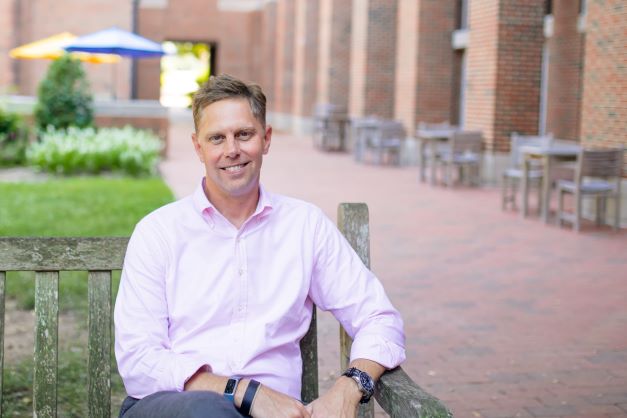 Michael Christian is a professor of organizational behavior, as well as a Bell Distinguished Scholar and area chair of organizational behavior, also at Kenan-Flagler Business School. His teaching interests include human energy optimization, resilience, leadership coaching, leading effective teams and organizational change. Mike earned a Ph.D. in management from the University of Arizona and has published in journals including American Psychologist and The Journal of Management. For Mike's full biography, click here.
 Benjamin C. Sullivan, CFP®, CVA, EA is Palisades Hudson's chief investment officer and a senior vice president. He leads a team of portfolio managers who oversee more than $1.8 billion in client assets, including all aspects of investment strategy, portfolio management, due diligence and manager selection. Ben serves clients across the country from his home base of Austin, Texas. For Ben's full biography, click here.
Episode Transcript (click arrow to expand)
Welcome to “Something Personal.” I'm Amy Laburda, the editorial manager at Palisades Hudson Financial Group. If you've never gone through a business degree program yourself, you may still think you know what kind of subjects are included: management, finance, business strategy. But today's episode will make sure that you include psychology in that mental curriculum list. First, I'm always happy to welcome Ben Sullivan back to the podcast. Ben is a senior vice president here at Palisades Hudson, and he's also our chief investment officer.
00:36
From his home base in Austin, Texas, he oversees Palisades Hudson's investment committee and serves clients across the country. And Ben is also one of the authors of our firm's two books, contributing chapters covering investment psychology, among many other topics. Ben, welcome back to “Something Personal.”
Ben Sullivan
Thanks for having me, Amy. I'm super excited for today's show.
Amy Laburda
Next, we're joined by Jessica Siegel Christian. Jess is a professor at Kenan-Flagler Business School, part of the University of North Carolina at Chapel Hill.
01:04
She teaches undergraduates and MBA students with a focus on leading and managing, negotiations, and groups and teams. Jess's research, which has appeared in publications including the Journal of Applied Psychology and the Journal of Business Ethics, focuses on team dynamics, counterproductive workplace behaviors, employee turnover, and many other topics. Jess, welcome to the podcast. We're delighted to have you today.
Jess Christian
Thank you so much, Amy and Ben. I'm really excited to be here.
Amy Laburda
And we're also excited to welcome Mike Christian.
01:33
Like Jess, Mike is a professor at Kenan-Flagler Business School, where he serves as area chair for the organizational behavior area and the director of academic leadership at Kenan-Flagler. As a teacher, he covers human energy optimization, resilience, leadership coaching, leading effective teams, and organizational change. Mike's own research focuses on understanding the mind-body connection at work, a topic on which he has published extensively in journals including American Psychology and the Journal of Management.
02:02
Mike, it's so great to have you with us today.
Mike Christian
Thank you, Amy. I'm really happy to be here. Hi, Ben. Hi, Jess.
Ben Sullivan
Hey, Mike. For our audience's benefit, I invited Mike and Jess to both be on the podcast. I've known them since college and [I’m] really excited, really interested in their work. And I've always had an interest in psychology. And those of you who've heard me on prior podcasts notice that a lot of that comes into personal finance as well. So hopefully we can learn something from the two professors here.
Amy Laburda 02:31
Well, Ben led me directly into my first question, which is: Both of you bridge the worlds of psychology and business. So I was curious, what was your path to connecting these topics? Was it business first, then psychology? The reverse? Or did you always know you kind of wanted to marry them? Jess, I'll start with you and then Mike, you can jump in when you're ready.
Jess Christian
Yeah. I met Ben back in college. And you know, Ben, even as a business student, I remember you asking me all of these questions when I was taking my psychology classes. So that stuck with me, your interest in the things
03:01
I was working on. I actually started college as an architecture major and very quickly realized it wasn't for me when I took an intro to psych course and was really fascinated with the industrial organizational piece of that course and just really what makes us happier and more productive in the workplace. We spend so much of our time at work. And I just really connected with that content.
03:25
I was hooked and started working in the industrial/organizational psychology research lab there. And when I was learning about grad programs, I realized that many of the same topics that I had fallen in love with, I could study in a business school and potentially even reach broader audiences and just really explore the fascinations I had with people in the workplace and study the things I wanted to study around teams and negotiations,
03:54
and went right to grad school. So I really started with a psychology background, but was really fortunate to work with faculty members at Tulane that helped me understand what I was doing was really applicable to the day-to-day business world.
Mike Christian
And for me, I wouldn't say there's, like, a linear through line to connect the two. It's sort of just there are multiple inputs that have all kind of connected in this really interesting
04:24
field that we're a part of, which is organizational behavior, which I think is just a wonderful science because it's fundamentally interdisciplinary. So it blends psychology and business and sociology and elements of anthropology that … And because what we're really looking at is how people and social systems, organizations, interact. So it has to borrow — it's not pure psychology.
04:52
So many of the concepts are social, psychological, but it's also about how we work within systems that are fundamentally about larger populations of people. And so it's just, it's a really cool science. And I think for me, getting there was, in part, the product of just, like, enjoying work. I like to work. And, like, as I've been an employee in many different jobs,
05:21
like, you know, working on a paint crew, working construction, working as a telemarketer. I've had a bunch of different jobs. In each one of those, I just find fascinating the dynamics. I'm curious about them. And I think what we get to do in this field that's so interesting and stimulating is understand the human experience of working. What is it like to hold different jobs? To have different
05:49
types of people that you interact with? What's the right way to be a leader? Are there styles and tactics and techniques that can help us to be better at our performance? And it's just a deeply human question, because we spend 40% to 50% of our adult lives working. It's just fundamental. So for me, there's that piece of it. And then in terms of personal story:
06:15
When I was at Wisconsin, I studied social psychology and sociology. I had no idea that organizational behavior existed. I didn't really have much of an interest in business at the time. And I wound up just, you know, doing what a lot of people after college do. I just held some jobs and lived life and had some experiences. I moved to San Francisco and became a food runner at a fancy restaurant and found myself eventually, after a few years,
06:43
becoming the general manager of a different restaurant. And so, you know, that process helped me to think a lot about management and how difficult it was. And I had this psychology background that I was constantly kind of thinking about. And so I quit and went back to school for my Ph.D. and went to Tulane for industrial organizational psychology and then had disruption. Both Jess and myself went…
Jess Christian
And Ben.
Mike Christian
…and Ben,
07:12
were there when Hurricane Katrina came through. And it was just a very disruptive event for us. And for me, there's a lot there. I lost a lot of the work that I was working on on my Ph.D. and then made a move to go to Arizona and had to redo a lot of work and wound up here. But for me, the most important part of that wasn't that the path
07:40
that got me to UNC, which is just a very special place to be. But it's also that I met Jess, and we have a really excellent family life and a son. And that's because of something that was really difficult that we went through. And looking back at that, that got me really interested in the research that I do now. I study resilience and human energy, and kind of thinking back to that time during Katrina is really when my research interests started to solidify.
Ben Sullivan 08:11
To me, that's really interesting. I'd never thought about it from that perspective, the Katrina impact and how that might've fueled your interest in resilience and everything, because it definitely is a formative moment in my life as well that I think back to a lot and shaped the way I think to today.
Jess Christian
I'm sure. And so much research, I know at Tulane kind of came out in various areas looking at how Katrina affected
08:38
so many aspects. But it's interesting because it really changed Mike's personal journey. So hearing him talk through that, I sort of realized that I came at what we do with more of an academic lens. I sort of fell in love with the research and then realized, oh, here's how I can make it really practical and really help people day to day. Mike sort of came at it from, here are all these personal experiences.
09:01
I've had bad bosses. I don't want to be a bad boss. Let me learn how to be a better leader. And then fell in love with the research piece of it, which I don't think that crystallized until we talked through this.
Mike Christian
Yeah, and I would say that the struggle for me when I was an undergrad and working on social psychology research, it felt like it wasn't very applied. And it was very important, but it was very foundational and fundamental. And it didn't connect with me in the way that the things that we study now
09:30
are related to real human experience. And you can just take some of the work that we ... Now, granted, some of the work that we do is still esoteric, but there's a lot more application. And we can see, I think, a little bit more clearly how the work that we do builds to create real, meaningful impact.
Amy Laburda
I'm just curious, the sort of interdisciplinary nature of the field that you're talking about.
09:55
Was that something where the field sort of worked, like it was out there had had the sort of more practical applications and then you found that, and it was a good match for your interests? Or has there been a push more away from theory and towards application in sort of the broader field of study?
Mike Christian
That's a great question. And I think that we're seeing some some change, some disruption, both in terms — and in academia, in terms of the way that we teach, but also in terms of what we study and the way that we talk about
10:25
the criteria for what's important. And we see, among the scholars in our field, a lot of discussion around, you know, is there just too much theory? Are we spending too much time in the ivory tower and not enough time connecting to real business practice? And at our school, at Kenan- Flagler, we are making a very explicit push to ensure that what we're doing connects to real-world application on the whole. That
10:53
there is room for basic science, and it's very important. However, it's also important that business schools showcase the impact and the tools that they can help to connect the real world with. And, you know, we're very fortunate because in a business school, we're constantly interacting … Both Jess and I do a lot of corporate education, working with people who are out in the field, coming for a week to hang out at Kenan-Flagler and enjoy the time there and learn.
11:22
They want tools. They want practical application. They want to be able to go back to work on Monday and implement. And so we get that exposure, which I think really helps us to think about how we translate the work that we do into real application.
Amy Laburda
Yeah.
Jess Christian
And so Mike's talking about the future and kind of where we are now and where we're going. And I think that's great. For anyone that is curious about sort of how our field developed,
11:48
I think it started, it kind of was forced into interdisciplinary as we tried to explain things that we didn't understand about what people do in the workplace. So that's basically organizational behavior, is what we're doing and predicting and understanding behavior and effectiveness at work. So if we try to explain something like, well, how do we make decisions? Well, we have to draw on, there's a lot of economics work that we draw on as we're building our science. And how do we understand,
12:14
you know, what's happening in people's minds when they're not being motivated or being motivated? We have to draw on basic psychology. So I feel like the field has developed as kind of grabbing pieces from other fields to explain. And then Mike's absolutely right, where they think of where we are going is even more of an applied lens, which is great for our students.
Amy Laburda
Yeah.
Ben Sullivan
Yeah, I think just the business school itself always lends itself to being practical and
12:43
having an application right there. So I think to the extent you're getting any kind of critiques that you need to be more practical, I imagine other fields are probably that much more extreme where it's like, this is just esoteric, because I'm sensing all the applied nature of your work when I look at it.
Mike Christian
Well, and believe me, there is a tension among scholars on that point. There's a lot of debate, because the basic science is fundamentally important, because that's how we make progress.
13:13
And so there needs to be an element there, but we also are spending more time considering how that basic science could be translated.
Jess Christian
And everything we do in our area revolves around people. So when thinking about how we're really marrying in people with what we're doing, and preparing our students to go off into the world, is how does working with people fit with business? And I will tell my students this: Pretty much everything that you learn here in business school will be useless
13:42
unless you're absolutely able to do everything alone without ever dealing with another human, or you have learned how to deal with people effectively. So you're going to depend on people to accomplish your tasks and goals. You'll work with people, for people, supervise people eventually. So unless you understand the basic psychology and how to work with others, you are not going to progress in your career. And the challenges are real and even harder as you progress in your career. I think we see a lot more
14:11
of our senior folks coming back for continuing education around that. So I think Mike, I'll pose this to you: As a manager and leading our group, you have to deal with so much of this in your day-to-day job. I'm sure, Ben, you do as well, in the types of decisions you're making and how you are leading.
Mike Christian
Thanks. Thanks for posing that one to me. I'll first just provide the caveat that among faculty, there is no leading the group. It's like herding cats.
14:41
People will do what they want. I do my best to try to hold the center, keep the glue together. But Jess is absolutely right. And I guess that one of the ironies is that faculty who study management, who have expertise and make recommendations and get paid to consult, are not necessarily the best at doing it themselves. And that illustrates Jess's point that
15:10
oftentimes we get promoted because of our technical skills, our technical expertise. And what we don't get promoted for is precisely what we're going to be doing when we get into that role. How do we work with people? How do we set the right goals? How do we give feedback? How do we manage conflict? Those are techniques that people start to learn when they get into those roles. We also do a great job of training them at Kenan-Flagler. So with our undergraduate and MBA
15:38
populations, and the other degree programs that we have, that's a primary focus, is helping people to get started with those human skills so that when they enter the work world and find themselves, you know, with one direct report or with a team, whether they're in a leadership role or whether they're leading from the seat they're in, which is a euphemism that we use. So if they're just in a team-playing role, those skills really matter from the get.
Ben Sullivan
Yeah, I think one of the things I think about is just
16:07
you have the theory behind what's going to happen, and then you have the reality of the actual human that's showing up on a given day. And I think that ties into a lot of your work. And it says, hey, we're not dealing with ideal robots. We're dealing with actual humans who might have had a bad day, might have had their kid up all night, any kind of issue like that. So it's like you can know the theory, and it's nice and easy when you're in a relaxed environment to apply that theory,
16:35
but then it's like you throw in a couple of variables and it's much harder.
Mike Christian
That's right. And that makes it challenging. When we talk about how the science translates into action, there's always got to be the caveat that there's going to be a lot of complexity there, right? And so what our science is, is a science of what works on average. And then we unpack
17:02
boundary conditions and what happens in this context or that context, so that we can help managers to come up with frameworks. But at the end of the day, a framework is not a plan. It's part of the planning process.
Amy Laburda
Yeah, so we've sort of skirted it, I think, for a little while now. And I mentioned in your intros some of your areas of focus. But I think it might be helpful to take a moment now and sort of give our listeners the big, 10,000 foot up, view
17:31
of what you both study. You're both in the same field, but you have slightly different areas of focus. So Jess, I'll ask you first, what is your main area of focus?
Jess Christian
Sure. Yeah. Most of my work has been on teams, how teams adapt and respond to different types of changes, leadership issues in teams. I've been doing that — You know Mike and I, especially early in our careers, he was doing some of this work with me, and then our paths diverged a little bit.
17:59
So I'm happy to delve in a little bit more in a bit, but yeah, most of what I study is about how we can learn and adapt in a team. So that's most of it. I recently did a paper that I really just delved into … I found really fascinating with one of my grad students on a non-teams topic, about the growth mindset. So I was working with one of my grad students around a growth mindset, which is an idea popularized by Carol Dweck
18:27
about the ability to believe you can learn and grow in aspects of your life. And so we looked at it at work. Like, do you believe your job allows for opportunities to learn and grow? And we found that that actually related to your willingness to help a coworker, especially if you would both learn from the interaction. So imagine you're really busy, but your coworker is requesting some help
18:53
with their presentation skills. And it turns out you also need to work on your presentation skills. So do you invest the time to help that person? And we found that a growth mindset was really helpful for that. So that's just sort of a divergence, but most of my work is squarely in the “teams” bucket.
Amy Laburda
Nice. And Mike, I'll ask you the same question.
Mike Christian
And I'll start the same way, that Jess and I have had many very fruitful — in fact, I think some of our best work has been together — collaborations. And as a team,
19:23
we supplied a complimentary fit that just works really well for us. And so, you know, I've studied a bit on the team adaptation side, but those are mostly projects that Jess has been leading. And, you know, I guess, like, a through line for me is the idea of adaptation, but I study it more at the individual level. And so I look at, in a nutshell, how people can deal with adversity,
19:51
find resilience, optimize their performance at work. And some of my work kind of delves into the physiology. So I have done a few studies on sleep deprivation and how sleep affects us and some of the remedies there, and looked at in particular how lack of sleep can fuel unethical behavior. And so that work kind of got me into thinking about the connection between our bodies and the
20:21
psychology that we experience at work, and how that can relate to our behavior ultimately. And so the connection there, it's just fascinating to me. And with all of the biohacking devices that are available to us now and that the popularity of that topic, I think, you know, A, it's topical and B, it's possible to collect more physiological data and
20:50
examine how our bodies and our minds interact at work. And actually, Jess and I are both working on a review of this really large, disparate set of research findings that are out there in our field, and some adjacent fields like psychology that take different theories or points of view on physiology. And all show that it matters tremendously for behavior at work. But what we're unpacking
21:18
right now is, is there a simplified reason why? Can we understand, you know, a set of categories that help us to unpack those effects at work? So primarily for me, it's not just about the body. It's also about how we manage our, the way we think. And some constructs interact with the mind and body. So like, for example, mindfulness is something that I've studied
21:46
and continue to have an ongoing fascination with. So a lot there that underlies the whole person and how that whole person shows up to work, including the mind and the body.
Ben Sullivan
So I think there's a lot of really good stuff in that, those two answers, to dig into. I think the most burning question right now is your research on sleep deprivation. Did coffee and caffeine cure any of the negative side effects
22:13
of sleep deprivation?
Mike Christian
That's really funny, because the Brazilian coffee growers’ association really wanted me to say that. They were really excited about a particular study that I was a co-author on with a couple of colleagues, Dave Welsh and Aleks Ellis and Mike Mai. And we had sleep deprived undergraduate students, for a full night of sleep. And then we bring into the lab a
22:43
control group, so a group that had slept eight hours, and then we mixed them up, right? And then we randomly assigned them to either get caffeine, like in the form of a gum. It was a placebo, controlled, like a military gum, that had 100 milligrams of caffeine. Or they would just get a regular stick of gum that didn't have caffeine. And then we'd give them the opportunity to lie, cheat, steal. And so this was fundamentally a replication of some of the work that we had done previously
23:11
that shows that when you're sleep deprived, you're more likely to have a difficult time controlling yourself. And so if a lie is going to benefit you, or if cheating or stealing is going to benefit you in some way, you have less restraint. And so we do find that effect in this study. But those people who are sleep deprived and receive the gum were just as ethical as the control group. And so it did appear
23:40
that 100 milligrams of caffeine made those effects go away, in our population. And that's when the Brazilian coffee growers’ association reached out to me.
Jess Christian
You didn't want a sponsorship deal or anything? You can call them back.
Mike Christian
I did. I did. Free coffee sounded pretty awesome. But the caveat I gave them was all I can say is that a stick of 100 milligram gum helped in the 20 minutes that we did that study,
24:07
because I cannot speak to how many cups of coffee one should have to be … and does it make you more ethical? I can't speak to that. It helps the effects of sleep deprivation reduce for that short period of time.
Amy Laburda
It's so fascinating, because I think it feels very intuitive, at least to me, that when you're sleep deprived or you're not feeling your best, you're less productive, right? Like that feels like, yeah of course. But the ethics component of it was one that really fascinated me when I was looking at your work preparing for this. Because
24:36
you say that and I'm like, oh, it does make sense, because your inhibitions in general are lower. But it's not a thing I would have thought to have been cautious about the same way as, you know, oh, I know how to check things for typos more when I'm tired, but I'm not checking my ethical decisions as closely that way.
Mike Christian
Sleep is … It's just fascinating. It's so necessary for us and we don't really understand it fully. And one of the reasons that it's so important,
25:03
in addition to the standard list, you know, like mood, motor skills, cognitive function, those are all impaired if you haven't gotten adequate sleep. But what we were looking at was the notion that sleep… So it operates on the prefrontal cortex. And the prefrontal cortex, it has a metabolism and you can measure whether it's working really hard. And when,
25:32
in sleep labs, other researchers had observed that the prefrontal cortex, which is the part of our brain that kind of gives us the ability to set goals, to plan, to reduce our impulses, to behave in a very human way. And we developed it incidentally, because we're social creatures and we have to be able to function with each other. And that means we can't be impulsive and we can't
26:01
punch the person that we're mad at. We restrain ourselves, right? And so when that is depleted because of a lack of sleep, then we're also just not as good as we normally are at restraining ourselves from doing bad things that we shouldn't do according to our ethical systems and social norms. And so the other thing I'll say is my advisor, Aleks Ellis, when I was a Ph.D. student was like, for your dissertation, man,
26:30
you've got to find something that's going to be a really big effect, because it's something that helps you feel guaranteed. You're going to get a paper published. And, we work in this “publish or perish” world. And we, together, talked about how sleep deprivation was going to give a big effect. It was like it… But we found — I think that the goal that we hit was that piece, was that it was also related to unethical behavior, which
26:57
we can make very practical recommendations to folks who are making ethical decisions, that sleep is fundamentally important for that.
Jess Christian
So in some ways it almost lets your worst self come out. I think parents of newborns can relate and say, oh yes, I know exactly what you mean. Because when Asher was tiny, I remember we'd snap at each other. And you're like, that's not how I would normally act. And Ben, I know it's been a while since Luke was a newborn.
27:24
But yeah, it's, you can… The worst parts of you can come out, and our advisor had young kids at the moment. So maybe he was living in it and was very fascinated by Mike's ideas around this.
Ben Sullivan
Bringing it back to a business perspective, have you done research or do you try to educate the MBA students on not just their own personal sleep habits, but is there a way for a business to kind of facilitate this wellness?
Mike Christian
Yeah, I think
27:53
it's been really heartening to see, over the past decade or so, the uptick in businesses and leaders who truly care about the well-being of their employees. There are some, you know… One of the things that I think can be really helpful is for managers to think about how they role model appropriate habits.
28:16
And to think about the culture they create. And I'll tell you a story that I came across when I was working on my original paper on sleep in my doctoral years at Arizona. And I was talking to someone who was working in an investment bank, who worked in a very high-pressure culture. And he told me this story about how it was an expectation to be sleep deprived. And so he would go home, and he needed to sleep, so he would get his sleep. But he would sleep in his suit
28:46
and appear at work the next day looking all rumpled and tired and, you know, get slaps on the back and attaboys for it.
Ben Sullivan
Nice.
Mike Christian
And that illustrates, I think, you know … His experience was an experience where you get this badge of honor for burning yourself out, right? Which is, when you think about “what is a toxic culture?” I mean, that's part of it. And so, you know, he had a work-around. But ideally, we find ways to support
29:15
the employees. And I think the trick there is helping to study and understand the ways in which taking care of yourself can actually facilitate your performance, and can make you more efficient and more effective and make better decisions. So ultimately, when you're an organization that is thinking about bottom line, which they should be, you can make the case that that helps.
29:43
It helps to support your employees. And so a lot of our work is around that concept.
Jess Christian
And I'm teaching a new class I just developed for undergraduates about bringing wellness into the workplace. It's called “Leveraging Wellness for Work Performance.” And this is more, since this is an undergrad audience, this is more about personal practices and less about what Mike was just talking about at the organizational, cultural, or leadership level. Like, what can leaders do? Build a culture and role model. But my class is really...
30:13
Part of it is working on personal care in ways that you bring your best self to work. So something like Mike's work on sleep is definitely touched on in our course.
Amy Laburda
So, Jess, you and Mike work with high schoolers a lot more than I do, so you may have a better sense of this. But definitely when I was in high school, there was sometimes a pre-version of what Mike was describing, with these high pressure sort of one-upmanship, right? Where you're in
30:41
eight AP classes and you're doing your extracurriculars. So when you're dealing with undergraduates in this class, are they coming in sort of like, “Yeah, sleep's important.” Or do you actually have to make that case to them, in some cases?
Jess Christian
You know, recently… So I've been a Kenan-Flagler since about 2011. I've noticed much more of an emphasis on well-being and taking care of yourself and balance in the last few years. But the reason I developed this class was because
31:10
for many, many years, and I still see some of this, you would see the level of stress. Someone would come in … I taught our undergrad core for 11 or 12 years. And the students would come in, I can't tell you how many were crying in my office about all the pressures and their internships, and they got an A-minus in this class, and they were just overworked and tired and overscheduled. And it's hard
31:36
when … They don't fully understand at that age, when they're 20 years old. They think it's everything if they get an A-minus or, god forbid, a B, right? And they're so overwhelmed and they're stressed and I see so much pressure on them. So I would try to counsel them through that. But that was one of the things that led me to develop this course. I would say at our school, thankfully, I don't see a ton of a focus on competition. I mean, the students might disagree.
32:03
But the group is very supportive and collaborative, and they don't seem to feel like they're competing with one another. But in the background, you still see that stress. But it has been really interesting to see the change. And they were excited for and embraced the things we were talking about in my leveraging wellness class. And a lot of them were doing some of these things. And they could share, oh, here's what I'm doing, here's what I'm doing, and talking about balance. I think some of it has come from
32:32
watching their parents work so hard. Maybe that's my personal experience, is watching my mom work so hard that she's just drained and exhausted. And the students of the last couple of years seem to not want to do that, which has been heartening to see. So they're open to it.
Mike Christian
Yeah, I think that that's really an interesting phenomenon. And we see it amongst
32:57
a lot of people who are of working age, from undergrad to corporate executives. People have taken sort of a renewed focus on their balance, their wellness, you know, the term that you might want to use often that gets bandied about is balance. And it's a good trend. I think it's a good trend that people are thinking about it. But it can be thought about in different ways. And I, you know … Some of the research
33:26
is, it's unequivocal that there are positive effects of taking breaks in terms of cognition, in terms of reporting restoration and replenishment. And then there's also some, and I just find this fascinating, it's some of the work that we do, is understanding what does work and what doesn't. And the increased priority has, in some cases, led people to
33:55
I think maybe commit the error of deciding that “well the best way for me to not burn out is to not try.” And that is, I think, an error, because if we engage in long-term thinking, one of the things that keeps us going is purpose and meaning and feeling as though you're valued and respected and really good at something. That's a fundamental truth about being a person, is that we want to
34:22
be our best. We enjoy feeling like we've accomplished, grown, learned. And so a lot of that involves putting yourself out of your comfort zone to experience, you know, what feels uncomfortable, like stressful, and then learning and growing from those experiences. And when we do that, then we're much more likely to experience short-term stress, but we have to balance it with recovery. And so I think that's one of the big tricks, is when we think about balance,
34:52
it's not so much proportionate. It's more about trying your best in the moments that you need to. And then also making sure that you take time to rejuvenate and recuperate and charge that battery back up. And so the advice that I often will dispense to folks when we talk about energy and optimization is — they get the advice whether they like it or not — is that it's really
35:21
important that they work hard at work, but that they also work hard at recovery. So both of those things are equally important. And the permission that you can give yourself is that, as a leader, as a team member, as a member of an organization, the energy that you bring in has a profound effect on other people. And so that's permission. That means you have to bring in the right energy. And if you're not bringing it in, then it brings everybody else down, too. So leaders, especially,
35:51
need to think about putting their own oxygen mask on, because it helps them help other people.
Ben Sullivan
Yeah, I think that's really important to understand. And it's something that I struggle with sometimes, is just being OK not doing something. And it sounds like, Mike, historically you might have been that way, too. Where you were saying, hey, I like to work.
Mike Christian
Oh, yes, still. Still am, by the way. You know, just because we study it doesn't mean we're good at it.
Ben Sullivan 36:15
Right.
Mike Christian
Right.
Ben Sullivan
You made a comment like that before, and it reminded me of, I wrote an article about the confessions of a financial planner and all of my financial sins that I commit. I know what to do and know what the right thing is to do, but it's a lot easier to do it for someone else than it is to do it for myself.
Jess Christian
I was able to find one of my favorite books I read recently.
36:40
It's called “Do Nothing.” I think this mindset that we're still training our students in, and we struggle with it too, is if we're not being productive, we're failing in the moment. And where we miss is we need time not only to recharge, but for reflective thought. To plan, just to kind of, like, be a little bit, which allows us to be more creative, be more productive in the moments. But Ben, I think you're not alone. A lot of
37:08
people, myself included, feel like we have to just be busy, and busy all the time, or we're failing in some way.
Mike Christian
Yeah, and the research is pretty clear that detachment is our friend. And so when we think about what it takes to have a good break or a good vacation, what are the factors that lead you to come back to work feeling rejuvenated and replenished? And some of the work there suggests that
37:35
people who are engaging in experiences that help them not think about work really helps. And if you...
Jess Christian
But people feel guilty. Sorry, is that what you were going to say? It's a study that one of our colleagues, Tim Kundro, led. Were you on that paper? I think you were. It's hard to remember. Mike works with so many colleagues. It's funny. I can't even keep track of his papers.
Mike Christian
It's Tim's, and Sal [Affinito] and Casher [Belinda]. Yeah.
Jess Christian
Yes. On the paper about when we do fully detach, we feel guilty
38:06
about it the next day. So we walk into that day, you know, work, feeling like we've done something wrong by just spending some time with our family and not checking our phones for a few hours, which is not super functional.
Mike Christian
Yeah, our world doesn't want us to detach. It, you know, that device that we carry around that supplies endless dopamine hits is not going to want us to detach from it. And so, you know, we get that dopamine from checking our work email. And we ruminate,
38:34
and we think about what we have to do the next day. And especially so for workers who have really high cognitive and emotional demands at work. Like if you're a manager, if you're in a field where you have some planning, long-term thinking, relationships to keep together. And so that's most of [the] people, probably, listening to this podcast. We are all experiencing the recovery paradox, which was a term coined by Sabine Sonnentag,
39:01
who's a scholar in our field, who did this big meta-analysis that looked at white collar [workers] and managers, and also people who worked in skilled trades and in labouring professions, and found that the folks who work in the demand — the really high cognitive and emotional demanding jobs are the people who report that when they return from a vacation or a break,
39:29
they don't experience as much replenishment. And the reason underlying that, at least as the theory goes, is that those folks have a really hard time detaching. I've done my share of working in jobs where I haven't really brought the work home with me. And I've brought a lot of fatigue home. But it's like crack a beer and think about the moment. You're more mindful, and then you go back to work.
39:59
But in the roles that we play now, I find that I'm going to sleep and thinking about work, and waking up and thinking about work. And it's really hard to detach. And so the trick, I think, is when you take a vacation or when you take a break, try to actually take a vacation and take a break. And that's hard. You're sitting on the beach drinking mai tais; you get that last two days of the vacation, you start drinking your mai tai but thinking about work.
40:26
Right? And so some of the tricks involve distracting yourself and, you know, engaging in mastery experiences like learning a language, experiencing a culture, doing things that occupy your mind in a different direction.
Amy Laburda
Yeah, I think of … Ben made a comment about his article, which I'll link in the show notes. And I think one of the points Ben made, that it sounds like we're also touching on here, is: Just understanding the problem is not a strategy to solving the problem. And it's much harder to apply for yourself than for others, which sort of leads me to the question for both of you as far as,
40:56
as professionals in this field, are there any patterns that you see people repeating over and over? That, like in other people, you're like, ah, it's so clear they should not do that. And then in yourself, you're really like, oh, I'm also the problem.
Jess Christian
But I think we all do. So Ben, I think you had noted this: Awareness [of biases] in themselves is not enough on [its] own. We need frameworks. We need process. Because just knowing a bias, right,
41:26
knowing that we have confirmation bias or knowing that people make poor decisions, is not the same thing as avoiding it. Because biases are automatic, right? And real situations, as Ben noted earlier, are much more complex. And we think we're going to do the quote-unquote right thing. But we come in and we're tired, and someone said something that we didn't like and now we react. I think we need … What we try to think through in our research, and then in our training,
41:55
is building in process. And even when it's hard to do, we … I mean, of course, we still make faulty decisions. And, you know, even being aware of it. But we still say, OK, here's how we're going to use a process to make a decision. Just as a quick example, we know from decades of research that when you're hiring someone, unstructured interviews don't work. Those are the kind of interviews that most of us, you know, had early in our careers, or certainly…
42:24
Very, very popular, but there's really no structure. You just go in and say, oh, let's just chat with this person. I'm going to use my instinct and see if they're a good fit. We know that unstructured interviews do not predict performance and instead just introduce a lot of bias. We hire someone who is very much like us and hinge on one thing. And then we like everything that they say. It's all sorts of bias. So even when it's hard, we try to do things like build in a process for a structured interview. So for instance, when we're
42:53
hiring our new Ph.D. students, even though it's a little bit more awkward, which I have to admit, I don't like doing a structured interview, but we know that they're much more predictive. So we're always trying to build in process, because certainly we are not perfect. And even, like Ben pointed out, knowing about these things is not enough to actually fix the problems.
Amy Laburda
Right.
Ben Sullivan
I think using just like the generic language: People have blind spots. And you don't recognize that you have a blind spot,
43:23
but you do. And it's just like, you can't see it. Like, you're not aware of it. So.
Mike Christian
Yeah. And the role of awareness and intention, that the pairing of those two things is really important, that being aware of where you are… I often will talk about, like, the red and the green. Like, if you're in the red, then you're feeling stressed. And maybe you're out of your comfort zone. Then trying to think about, OK, I've been in the red. For how long have I been in the red? And then doing things that will help you get to the green, so that you can replenish that battery and then use it in the red again.
43:53
And in thinking about how is it that we become aware of whether we're red or green, that's a really interesting question, right? And one of the ways [is] that we can just engage in self-check-ins and asking ourselves that question, but not all of us are great at that. And so we can… This is part of the reason that the Apple Watches and the WHOOP bands and all of the different biohacking devices that are out there can help you, and provide you with HRV [heart rate variability] data on your readiness and
44:23
that type of physiological indicator. But also people who know you well can help you with that. Jess, I always talk about you when I'm talking about energy crafting and the idea of … how is it that we know how we're doing? Sometimes that's a partner who will help them to see that they're feeling stressed. I don't recognize as well when I've been working so hard that maybe I
44:51
have too-high stress, and I need to do something to take a break. And you're good at telling me. And I listen when you tell me.
Jess Christian
That's comforting. He listens.
Mike Christian
I try. I try. I try. And so, like, that awareness component is … It takes some thought. And it takes… And the recommendation that I tend to make, that I think works, is don't just listen to me or Jess or to, you know, the people… We're not
45:19
gurus. We just study it. Instead, know what you need. Know yourself and pay attention. Because, more than anything, the science can get you so far, but just making sure that you prioritize it is a big win.
Ben Sullivan
Yeah, I'd say I had three takeaways from that. I love Jess's idea about having systems in place to try to prevent things from going astray, from any of the blind spots or biases impacting you.
45:47
Having a partner is fantastic, but also do you guys ever talk about having a coach get involved, an executive coach? Or you could also think, if it's not a business setting, of, like, a therapist getting involved?
Mike Christian
Yes.
Ben Sullivan
I said three, but I really had two.
Mike Christian
And does an AI count as a coach? Because this is becoming more and more common, that folks can use an AI as an assistant. And I, as a manager, I actually will check in
46:17
with the AI, not necessarily to understand my stress levels, but to get some feedback, best practices. And now I've uploaded a bunch of academic documents to VINE so that I know that it's giving me really reasonable science-based and evidence-based feedback. I ask for citations. But it can be very, very helpful from a managerial perspective to get some feedback. Here are the last 30 emails that I've sent to the group. Help me understand
46:44
where I might be falling short. What are people not seeing? Am I leading change the way that, you know, Kotter's framework would suggest I should? And indeed, I'm not, right? And I learned that from the AI and tried to get better.
Jess Christian
And Mike and I don't do any executive coaching directly, but certainly there are some programs where our students, you know, especially in certain leadership courses, will be paired with an executive coach and work in small groups and get some feedback.
47:10
So it's definitely something that we recommend and have in place at Kenan-Flagler. But Mike and I don't do any of that kind of one-on-one work. We do work with executives in a class format or an executive center, but that's more kind of traditional teaching and not coaching.
Mike Christian
Can I add one more to Ben's list? Which is automation. It's practice. So I think that one of the tricks is
47:39
to do things… There's this great book called “Atomic Habits” that talks about the process of automation and really the idea that I know what I should be doing. Like, I know I should be getting sleep or eating well or getting some exercise. But I don't, right? I don't do it. I'm less likely to do it when I'm stressed, which is exactly when I need it, right? So that, and that's the fact that probably many people experience, that when the time comes, if we haven't automated,
48:09
when we have the trigger, we just … We say, I know I should be doing that. But then when you have the trigger, your mind is occupied with the thing that's stressing you out and you forget. You don't do it. And so it's about forging a strong neural pathway, and connecting the stimulus and the response in such a way that it's easy for you. And you're never going to automate something that you don't like doing. You have to pick things that you enjoy and then try to make sure that you commit to a routine that's easy, but you do it.
48:38
And so that when you get under stress, you are more inclined to keep those good habits going.
Ben Sullivan
And I think of that for others as well. So it's creating the systems that make it the easy way to do things, so that there's less friction in the process. So it doesn't take so much willpower, if someone's not having a great day, to get through all of the steps of the process.
Jess Christian
Yeah. So if I'm leading
49:02
my group, I have to give them those steps, or people will default to the biases or the easy way, and sometimes not always the most productive way. So we know that if we… If I'm leading, you know, a hiring committee and I tell people, you know, go out and do some research, they're going to come back and potentially just have a chosen candidate in mind, argue for that candidate, advocate for that person and close their mind. And they won't be willing to listen and learn when we're actually trying to make a decision.
49:30
So for instance, if Mike wants to hire candidate one and I want to hire candidate two, we can get locked into our disagreements there in that group context. So we advise a process [that] is, first, as a leader … Say this is the same scenario. You set the goal, the criteria. What are we looking for with this role? Let's first talk broadly about what are the goals? What are the most important priorities? What are we trying to fulfill? Then asking people to go out and do their research, then bring back information.
50:00
People will actually research differently if the problem is framed differently. And then we have a discussion. Because if you don't follow a staged process like that, we end up with all sorts of decision-making biases. So yeah, so as a leader, I think you can see it as part of your role to frame and build process to make better decisions with your team.
Mike Christian
Yeah, and some of Jess's work on team adaptation and the processes to put into place, it pairs really well with thinking about
50:30
individual adaptation. Because teams are different entities, but they experience similar things: adversity, disruption. But there's different recommendations there too.
Amy Laburda
Yeah, I was curious with the team portion of it all. Are the processes that you're describing also useful for gridlock? Because I'm really curious about the contrast between, on the one hand, the power of groupthink and getting pulled along with the herd versus
50:57
a group maybe with stronger personalities, where getting to consensus is hard. Like, is having a sort of multi-step process that is set out and you work through helpful with that sort of gridlock as well?
Jess Christian
Yeah, I think … So we need process for all of these different reasons, because … I mean, sometimes I guess it depends on the context and the folks you have in the room and the decision. But sometimes we see groups just
51:22
falling prey to groupthink and making a quick decision. And they think, oh, this is consensus, this is great, everybody agrees. And then we make a very quick decision. And unfortunately, that's not often the case. If you kind of are trying to make a decision in a meeting and everyone says, OK, so everybody agree about this project? Everyone agree about this course of action? And no one says anything, we think, great, everybody's in agreement. So sometimes we mistake silence for actually
51:49
agreement and critical thinking. So silence might mean I'm actually afraid to speak up and I don't feel comfortable dissenting. So sometimes we see groups really … Just because of all of these evaluative norms and we feel that pressure. If I disagree with Ben, is he going to think less of me and he evaluates my performance. So we sometimes push… So groups, it's very — That's one of the reasons I find them so interesting, is they sometimes can do very different things. And sometimes we push towards
52:19
a very quick consensus that is not ideal. We just kind of satisfy and converge on the easy — quote “easy” — solution without debate. What we really need to be doing, generally, for big important decisions, is striving for a well thought out consensus process, which involves sort of the process I was hinting at earlier. [It’s] asking the right questions, challenging each other to say, well, what happens if we made the opposite decision? What kind of things, what evidence would we have to
52:48
see or read about or hear about to change our mind? And be asking some of the tough questions to make sure we are challenging each other productively for big decisions. I don't mean for every little tiny thing. That would take too long. And I was just over at our executive center the other day, and we were talking about decisions when you might want to strive to push for a long, time-consuming, kind of inquiry-based decision process, and when you would just say, you know, this is just not that important, let's move on.
53:18
Someone in the room said that her and her team were debating about adding one question to a survey. And then they said, you know what? This is not that big a thing. Let's just add this one question. No big deal. Right? Easy. We don't need an hours-long consensus process. But for the big important decisions, we always advise very a clear process, and making sure we are getting people to open up and share information and asking the right questions, so that we're not
53:46
falling prey to groupthink in our decision making.
Mike Christian
And sometimes as a leader that can involve very explicitly asking for conflict, asking for disagreement, you know, like mining for it. And maybe even appointing a role, someone to play devil's advocate. Even if, you know, they don't actually have a devil's advocate thought, it can be really helpful for them to take that role
54:11
and push the group, because we make better decisions when we've been pushed. We'll think through more nuance. As an example, I was meeting with our group, the organizational behavior area, the other day. And it was on Zoom. It's a medium that is kind of devoid of a lot of the body language signals and
54:39
the information that you normally get when you're talking to people. But I proposed something that we'd been working on for a while, involving a leadership framework. And I talked about it for five or 10 minutes. And then I said, OK, who has questions? And it was crickets.
54:57
It was crickets. And so, you know, I could go one of two ways with that. I could either say, awesome. Right? Everybody loves it. Like, there's no disagreement. Everybody thinks it's great. But I think the reality is the sad one, because, you know, we study this stuff. It's apathy. People are like … The absence of conflict is often
55:17
apathy, a sign of apathy. And so you have to get it. And so the next goal that I'm going to have in our meeting about that framework is to try to mine for conflict. Say, all right, so what are the problems here? You know, let's figure it out.
Amy Laburda
Well, I feel like there can be an emotional component too, of … If it's presented to you as “do you have any questions about this?” you're like, oh, I don't know if I want to be the only one. Versus “what are the problems” is more
55:40
actively soliciting a specific kind of feedback. So that makes a lot of sense. I mean, I think we've all been on those giant Zooms where you're like, OK, I don't want to rock the boat. I don't want to be the one to jump in right here, because it's very easy to feel that way, I think, in a remote situation, especially.
Jess Christian
That's a great point. So if I … I actually was teaching during that meeting, I would have — now I'm like, I wish I was there. I would have had a question for Mike. I'm sure I have plenty. But I think framing it like
56:10
very specific. Now, as a leader of the meeting, you can say, OK, so with this one very specific piece, here's a concern. Who else or who wants to talk about that? Rather than just being very open with, well, who has any questions, right? Like Amy was just saying, that can be difficult. But if you tee up something very specific you want to talk about, maybe someone says, oh, I was thinking that. Here's my chance.
Mike Christian
Yeah. And if we're just going to get into giving me feedback on leadership stuff —
Jess Christian 56:37
[laughs] I could do that all day.
Mike Christian
I have another thought too. And I'll tell you, managing a group of management experts is the hardest job in the world, because everybody's got feedback.
Amy Laburda
Oh, I imagine.
Mike Christian
But I think that there was another effect there, which is that all leaders should be really conscious of and group process. Like Jess was saying, the status effect, the fact that here I am, the area chair giving this
57:06
idea to everybody that I've been working on for a long time. Basically, the subtext is: Isn't it great? Please say yes. I did not say that, but that's the subtext. A leader needs to think about how they can create a safe environment for presenting a new creative idea, so that everybody is going to feel
57:28
totally empowered to give real feedback in that meeting. And I think I made the mistake there of not doing that. So a better framing could have been, I want to present something that's a work in progress, and I need some criticism from everybody here, because it's not going to get good without our eyes on it. So here's the idea, give me the thoughts that you have that's going to make it better. Some version of that would have helped.
Ben Sullivan
So I’m going to tee up something else but also tie back to what you were talking about. So you've done research on the hero’s journey. And kind of the way I interpret that is you are the main character in your life story, and that's the way you are going through it,
58:06
and there's conflict that you're coming over. So Mike, you're the leader of this team
58:17
and you have this great idea. So don't you want that idea to be part of your winning in life and one of your successes? So why would you want to introduce conflict into that situation? Just to make a better story?
Mike Christian 58:35
Yeah, great. So we can think about how I might have interpreted that meeting. So here I am working really hard. I build that great idea. I bring it to everybody. And then I get crickets and I go home and I, you know, weep into my beer or something like that. And so how do I reframe that? And so that I'm not going through this — going home and thinking, gosh, I'm just a really bad leader.
58:57
It just feels like nobody likes my idea. Well, the hero's journey is maybe a way to think about that. What that is, it's based on some research that I've done with Ben Rogers, who led the project — he’s a former Ph.D. student from Kenan-Flagler who is now at Boston College — and Kurt Gray, who is at Ohio State
59:19
and was at UNC. He's a social psychologist, just a brilliant social psychologist. And we were looking at the idea that stories are really powerful
59:31
narratives, the way that we talk to ourselves. And we do it all the time. We have these ongoing, running narratives in the background. And there's some evidence that our brains are hardwired for story, from the ancient stories like Beowulf and the story of the Buddha and the Siddhartha to modern day. We see the same thread. So even, like, Star Wars and even the Barbie movie are stories of heroes. And those stories all have these similar, common
01:00:01
elements. And what we found was that if you think of the events that have unfolded in your life as fitting into those same common elements of the hero's journey, then it helps to connect some purpose and meaning. And it gives you a sense of sort of cohesion with the journey that you're taking. And so those elements have been broken down by Joseph Campbell. And Dan McAdams researches this and was on our author team as well. And he studies the power of story. And so,
01:00:31
you know, the way those elements work together is, if you use the Star Wars example, that when Luke Skywalker started out, he was a farm boy on Tatooine. He looked up at the multiple suns in his sky and thought about going to space someday. He had a call to action, right? And he felt he was moved to go to space. He just felt he had to do it. And in space
01:00:56
he encountered difficulty, despair. He got his hand chopped off by Darth Vader. And then was helped, by robots and friends along the way. And then fought the bad guy and returned triumphant
01:01:08
as a Jedi Knight, right? And so the ideas there are inherent in almost every story. The idea that you start out and you endure trials, have friends that help, and then you transform into something better, something that emerges from the ashes, right? The story of the phoenix.
01:01:29
And I think the sticky idea to the hero's journey is that transformation, it's not easy. It requires pain. It requires support. It requires friendship. And it takes time. And so
01:01:42
what we show in that paper is that we're all heroes on journeys. So we can think of ourselves that way. And even if we're dealing with adversity in the moment, if we recognize how that can connect to the larger narrative, and thinking about the story that I was telling you earlier about Hurricane Katrina and how I essentially lost my dissertation in the flood and then had to redo it. At the time of the flood, I just felt pretty bad. But
01:02:10
eventually, I can look back at that and say, god, that was the best thing that ever happened to me. I became who I am today because of the worst thing that ever happened to me. And that's very powerful, to tell yourself that narrative. And it's powerful mostly because it creates a sense of meaning. And you know, in our work, we find that telling your story… So we built it. We have an online platform that people can visit. I think it's on Ben Rogers’ website. They can enter in details of their lives that … We have prompts that ask them
01:02:40
just the things that have happened to you, that have made you you, and then it will reorganize your story into a hero's journey for you. And we find that people who we call it “re-story” are more likely to solve problems in their day to day. They experience [a] higher sense of resilience, reduce depression, and all kinds of really positive effects.
01:03:02
And so, back to the Mike – to criticizing my leadership style. If I saw that absence of good feedback, or negative feedback, or whatever as just part of that, that's the adversity part. That's the part that I'm dealing with. And I need to figure out how to make this group more supportive, so that they can help me along this journey so we can all get it together. Maybe there's a way that I can reframe it.
Jess Christian
And so this is compared… Mike and Ben and their colleagues — Ben Rogers
01:03:32
and their colleagues — found that the framing of the story, it's not just telling your story, because some of the control conditions are telling your story, but it's just telling your story. It's not in the hero's journey format. So it's not simply just about writing down your life story. It's that these elements… So compared to the groups of folks who do just writing their life story-ish, kind of manipulation to the hero's journey, they saw pretty extreme differences. I thought it was interesting that
01:04:02
people who saw … who did the hero's journey intervention actually, like, see meaning in, like, various strings of words, right? That have, like, hidden meanings. They actually are more likely to find meaning in meaningless strings. So anyway, interesting. But if you want to see … This is a general leadership lesson too. I think if … Mike and I have both spent, you know, a lot of our lives in front of classrooms at this point.
01:04:29
And you can sit there and kind of talk and talk about research, and drone on about ideas and whatever. But if you want to see a classroom perk up, start to tell them a story. Everybody will just kind of look up a little bit. They'll, like, they just engage. They'll actually lean forward, because we're so motivated or so interested in stories.
Mike Christian
Yeah. And this is maybe a tangent, but
01:04:55
I mentioned Kurt Gray, who is a co-author. His work on story is really compelling, especially when it comes to polarization and political divides. That connecting to people who maybe have opposite views from yourself, and connecting on story, is a great way to minimize the differences, because fundamentally we're all human and we all share very similar experiences. And it can really reduce feelings of polarization.
Ben Sullivan 01:05:23
In high school, I did debate and it taught me to argue both sides of a case. So the pro, the con, and being able to tell that story from that perspective. And I think that was really powerful, because you could sense why that story was being told.
01:05:39
And then tying together kind of Jess's work before, what she was talking about was the growth mindset. And what I sense from creating the hero's journey style story is it illustrates to you that although you might feel powerless during the story, when you look back and see that story, you're like, whoa, I was the main character and I was in control of what was happening. And it all was to get me to this ultimate
01:06:04
purpose here.
Amy Laburda
So, sadly, I could talk to the three of you for easily another hour or two…
Mike Christian
Aw, does it have to be over?
Jess Christian
We were having so much fun!
Amy Laburda
I know, me too. But we are coming to the end of our episode. So I like to leave our episodes with giving our guests the last word. Ben knew this was coming, since he's been on before. So I'll start with him. Ben, do you have any last questions for Jess and Mike, or just any closing thoughts of the many great things we've discussed today that you want to leave us with?
Ben Sullivan 01:06:34
So like you, I could have gone on forever with this. I really appreciate both Mike and Jess being here and find their work incredibly interesting. What I also like as a business person, you guys coming from business school, is what do you think are the key takeaways that students have from the organizational behavior classes? Like, what are they like “wow, that really is the big impact” [about]?
Jess Christian
For me, I think it's self-awareness
01:07:03
and understanding process, like I said, because … So the self-awareness piece, you know, in one of my classes we do, and Mike also does this, we do a user manual exercise. And you know, this is a class on leading teams, where people have to, like, write almost a manual. Like imagine in the olden days when you had a new computer, you would have a manual for how to use it.
01:07:27
You sort of write a user manual to how to operate me as a teammate. So you have to do a lot of deep digging and reflection. It’s: How do people best work with you? And a lot of my executive MBA students, we do this exercise and they say, I learned so much about how I like to receive information. Just from the self-reflective exercise about how people can work with me and how I should be interacting outward. And they take it to their teams. So it's a great thing about working with our executive MBA students, is they're all working professionals.
01:07:56
And so many of them say, not only did I learn so much about myself, but now my team is functioning better, because people understand how we work and we don't make negative attributions about each other's behavior. So a lot of self-awareness, and a lot of just process for dealing with the complicated nature of people. So Mike, if you want to add to that, I'll say, what would you say comes out of your classes?
Mike Christian
It's complicated dealing with people, isn't it?
01:08:25
And so, you know, on that note, I think that both Jess and I and all of the faculty in organizational behavior focus a lot on experiential teaching. And the reason is that you can't learn how to deal with people, how to interact with people, how to build relationships by reading a textbook. You have to experience it. You have to develop wisdom. And so we focus a lot on giving our students the tools to take all that deep
01:08:55
technical skill that they have, that they're learning in their finance and accounting and operations and marketing courses, and build that into how are you going make a decision using that data with a team,
01:09:08
under stress, in uncertainty? And so what we, I think, do really well at our school … And a lot of business schools are good at the technical skill training, but what we at Kenan-Flagler do really well is help our students to feel as though they know how to thrive in uncertainty with other people. And we're building for our students this brand, this differentiator that helps them to feel like, you know, if there's disruption, if
01:09:38
there is adversity. I've got it. I have had that experience in the classroom, in making a good decision with people and knowing who to go to and what relationships I need to access and creating a vision for the future. And all of those things that need to come into becoming an adaptive leader are skills that we train, I think, extraordinarily well using that model, using the experiential model.
01:10:05
And we call it the pivot, the Kenan-Flagler pivot model. This is the idea that we train our students to embrace uncertainty. And this is something that recruiters of business students coming out of business school feel is a differentiator for our students. Our students are going to thrive in uncertainty, in ambiguity, and that's
01:10:26
something that's just becoming key these days.
Amy Laburda
Yeah. Awesome. Well, Jess, I'll hand you the mic next. Were there any topics we didn't touch on or any final thoughts you wanted to leave us with today?
Jess Christian
No, I think you all did such a great job getting at some of our favorite and most interesting research. I'd say we could sit here and chat for hours, but I won't put your listeners through that much more, even though we do find it fascinating.
01:10:53
I'm going to tee up Ben for potentially the future. I'm not sure how much folks have heard about his business backgrounds and his Katrina story, you know, because he has that as well. And I actually, I'll just, it's not really a question, just sort of a potentially a debt of gratitude to Ben, since he was, all throughout college, my main connection to the business school and say hey, you folks are doing some interesting stuff over there.
01:11:18
It's too bad you’ve got to wear suits all the time and in psychology, I'm here in my jeans and my T-shirt. Other than that, though, it sounds like you're doing some interesting things. So I think your background there, Ben, potentially really did help me say, hey, I can kind of do this in a business school and really get some interest in it. So maybe for the future, we'll get to hear more about your story and what really drove you into where you are today.
Ben Sullivan
Sounds good.
Mike Christian 01:11:48
Maybe Jess and I can hold a podcast and post it.
Jess Christian
[laughs] Interview Ben!
Amy Laburda
There you go.
Ben Sullivan
Sounds dangerous.
Mike Christian
Thank you for inviting us to be on this wonderful show. And Ben, you are an inspiration to us, and we just really do appreciate being invited.
Ben Sullivan
Thank you.
Amy Laburda
It was truly our pleasure. Mike, I'll hand you the metaphorical microphone to finish us up here today. Did you have
01:12:16
any final thoughts, any last things we wanted to slip in before we had to wrap up?
Mike Christian
No. I just say, to sum up some of what this work that we've been talking about in terms of human energy suggests is, I mean, I think the science is coalescing. And it's coalescing around two truths. One of those is that resilience requires energy.
01:12:37
You've got to spend energy in order to get through adversity. But the other truth is that leaders have a really profound impact on the energy of their followers and their teams. And so the way that leaders show up to work matters. They bring the weather to their teams. And so if we want to have resilient teams and resilient organizations, then we have to take care of ourselves.
01:12:59
That means we have a dual responsibility to take care of the weather that we're going to bring to other people. And so think of yourself as a role model, and put your own oxygen mask on first before you help other people.
Ben Sullivan
So you can control the weather.
Mike Christian
You can control it to some extent.
Amy Laburda
That's the takeaway.
Jess Christian
That's what we'll leave with. Yes, sounds perfect.
Amy Laburda
All right. Well, thanks so much to all three of you for your time. This was a really fascinating conversation. I had had a great time talking with you today, and
01:13:28
I really appreciate you lending your expertise to our listeners.
Jess Christian
Thanks for having us. I really had a great time.
Mike Christian
Thank you.
Amy Laburda 01:13:36
Thanks for joining us for the third season of “Something Personal.” Whether this was your first episode or you've been with us all season long, we're delighted to have you as a listener. As we wrap this season, I — along with our producers, Ali Elkin and Joseph Ranghelli — wanted to take a moment to thank all of our guests, especially those who joined us from outside Palisades Hudson. All of them were incredibly generous with their time and their expertise. If you're a new listener, you're in for a treat when you catch up on our earlier season three episodes.
01:14:05
And, whether you're a new arrival or you've been with us since season one episode one, be sure that you subscribe. We're taking a short break, but we'll return with a fourth season of more conversations with fascinating professionals starting this fall. Subscribing to the podcast on YouTube, Spotify, Apple Podcasts, or wherever you like to listen is a great way to be the first one to hear when season four arrives. And if you're a new listener, use the summer to catch up on our first three seasons.
01:14:32
There's plenty of engaging conversations waiting for you in our backlog. I'm Amy Laburda and you've been listening to “Something Personal.” I hope you'll join me and my colleagues from Palisades Hudson Financial Group for more deep-dive conversations like the one you've just heard in autumn of 2026.