Something Personal, Season Three, Episode Five: Building Community Around Mission
 Ben Hall has worked for The Country Music Hall of Fame® and Museum for more than 15 years, and he still describes it as “the coolest place in the world.” In this chat with Palisades Hudson VP/CIO Ben Sullivan and “Something Personal” host Amy Laburda, Ben Hall opens up about the central importance of building relationships in his work as a vice president in the Hall’s development office. Both Bens also explore the ways that philanthropy can help individuals to shape the world to look a little more like they want it to. Listen in for thoughts on how a mission you’re passionate about naturally builds community, the importance of cultivating gratitude, and more than a few fascinating tidbits about music history.
Links
- The Country Music Hall of Fame® and Museum
- CMHoF Digital Archive
- Hatch Show Print
- “The Benefits of Volunteering” (featuring Paul Jacobs)
- “Taxes, Tariffs And ‘All That Government Stuff’” (featuring Ben Sullivan, along with Larry Elkin and Paul Jacobs)
- “Why I Serve On A Nonprofit Board” by Ben Sullivan
- American Currents: State of the Music
- BONUS: Larry Elkin's moose hat
About the Guests
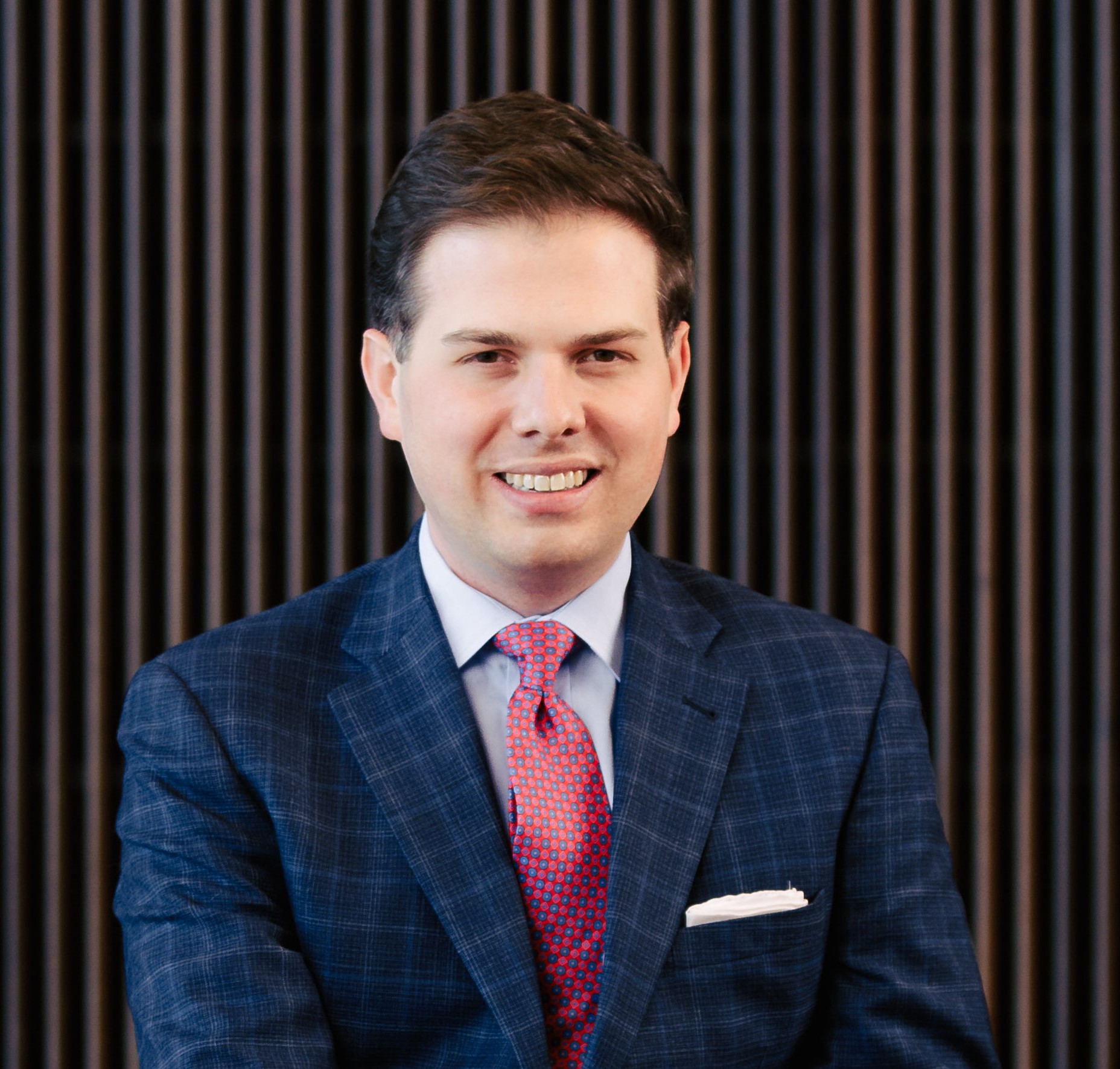 Ben Hall, vice president, development at The Country Music Hall of Fame® and Museum, has been with the museum for 16 years. Ben oversees diverse fundraising initiatives consisting of the museum’s annual fund, major gifts program, planned giving, corporate philanthropy, membership and special campaigns. He also manages Country Music Hall of Fame member relations on behalf of the museum. He received a bachelor’s degree from Belmont University and holds a Juris Doctor degree from Nashville School of Law.
 Benjamin C. Sullivan, CFP®, CVA, EA is Palisades Hudson's chief investment officer and a vice president, set to become a senior vice president in January 2026. He leads a team of portfolio managers who oversee more than $1.8 billion in client assets, including all aspects of investment strategy, portfolio management, due diligence and manager selection. Ben serves clients across the country from his home base of Austin, Texas. For Ben's full biography, click here.
Episode Transcript (click arrow to expand)
Welcome to “Something Personal.” I’m Amy Laburda, the editorial manager at Palisades Hudson Financial Group. Today, I'm excited to sit down with two guests who share a first name but who, more importantly, share an involvement in charitable spaces and a taste for country music. First, I'm welcoming Ben Sullivan back to Something Personal. Ben is a vice president and the chief investment officer here at Palisades Hudson. From his base in our Austin, Texas office,
00:34
Ben oversees Palisades Hudson's investment committee and serves clients across the country. As returning listeners know, Ben also serves as a member of the board of directors of Caritas of Austin, a nonprofit focused on preventing and ending homelessness in the area. Ben, welcome back to the podcast.
Ben Sullivan
Thanks for having me, Amy.
Amy Laburda
And I'm delighted to introduce our listeners to Ben Hall, vice president of development at the Country Music Hall of Fame and Museum. Located in Nashville,
01:00
the museum is a 501(c)(3) nonprofit with the educational mission to collect, preserve and interpret the evolving history and traditions of country music. If you find yourself in Nashville, the museum is well worth a visit. And I'm not only saying that because Ben Hall can hear me. Ben, thank you so much for joining us today.
Ben Hall
Thank you, Amy. Thanks so much for having me.
Amy Laburda
So Ben Hall, since you're new to the podcast, let's start with you. I wonder if you could just explain for our listeners a little bit
01:28
what your job involves, how you got started at the Hall of Fame, and a little bit of your history with the Hall of Fame and Museum.
Ben Hall
Of course, happy to. And thank you for introducing the museum in such a beautiful way. You described it well, and we are situated in downtown Nashville and have been since 2001. The museum itself opened in 1967, and we're lucky enough to be visited by about a million and a half people a year, making it one of the top 10-visited American history museums in the country.
01:57
I have worked here about 16 years, a little over. And I've been a great fan and lover of country music all of my life, and a guitar player on the side, and was always immersed in music in some way, either reading about it or listening to it or playing it or whatever. It was always part of my life. So I came to Nashville to be a student at Belmont University, and decided between the second and third years of school to stick around for a summer, and was lucky enough to get a job here
02:26
at the museum, working down on the front line, selling tickets, and giving tours of historic RCA Studio B, and greeting people as they came in the door, and virtually anything these people would let me do. And stuck around over the last 15 plus, and that has become a position in the development office during some times of transition that I've been lucky enough to see the museum… see those things complete in a very beautiful way.
02:55
My role is — as vice president of development — is traditional fundraising and philanthropy in the sense that it's major gifts, it's corporate fundraising, it's traditional grants from federal and state, and local grants to private foundations. Of course, it's annual membership, it's planned giving, it's all those general components that any other institution would call development work. But I'm also lucky to get to oversee Hall of Fame member relations,
03:24
which is: direct liaison to the members of the Country Music Hall of Fame, which involves a number of special projects, from the expansion of our permanent collection, and also the medallion ceremony that we just worked through just a moment ago. So it's a great place to be. I've enjoyed being here, and enjoyed sort of moving forward and growing with this museum as it has grown through times of expansion and times of growth. And it's just
03:53
the coolest place in the world, I think.
Amy Laburda
Sounds like they certainly keep you busy these days, or always. You were busy with the tours too, I'm sure, when you started.
Ben Hall
There's always something happening. There's always something happening. Our visitorship, of course, is from all over the world. People who are drawn into this subject matter, and they know something about it, or maybe they know nothing about it, but they come here and they see this place as the educational institution that it is.
04:21
And [they] tour through rotating exhibitions and take part in our education programming. And even researchers, who are accessing the archive as means of the resource that it is. So there's always something happening. There's plenty to do.
Amy Laburda
Well speaking of the things that are happening, I touched on your formal mission in your intro, but I wonder if you could just give sort of a brief overview of a few of the things that may go on there. I'm sure
04:46
visitors can see all the many, very cool exhibits that you have, some of which are permanent and some of which rotate. But what all does the Hall get up to these days?
Ben Hall
Sure. So that's a great question, because there are so many different expressions of that mission that you described so well. And the exhibitions are part of it. There will be close to 20 rotating exhibits in any given year, in addition to our permanent collection, the pieces of the permanent collection that are on display in our core exhibition space.
05:16
But in addition to exhibits, the Taylor Swift Education Center is a primary component of this museum. And out of that education center comes around 2,000 hands-on, educator-led programs every year that will engage a couple hundred thousand learners from everywhere. And that ranges from songwriting programs — I think you've seen some of these in action, Amy, over time — where we take students and walk them through a 10-unit curriculum in how to write a song.
05:45
So going from hook, and rhyme, and meter, and all the various phonetics of songwriting. And then at the end of it all, see those lyrics, those student-written lyrics, original lyrics set to music. So social and emotional learning, incredible in the realm of literacy skills, and the outcomes and the outputs that are related to it. So that's a big component. Education programming through the Taylor Swift Education Center. Hands-on programs, family programs.
06:14
Of course, the theaters are always busy with public programs, and interviews, and songwriter performances, and musician performances. But there's also this marvelous behind-the-scenes work that we see expressions of through these programs and through these exhibits. But it is a constant archival operation that's going on, from film digitization and photograph digitization, to the conservation of
06:41
treasures of this music, from stage wear and musical instruments and songwriting manuscripts and personal effects. And all of these things that this staff is working on constantly to make sure that we live up to our mission to preserve these things for all time. So a long answer to a very good question, all to say that that mission is core to our existence, and we're always looking at innovative and efficient ways to execute it well.
Amy Laburda 07:11
It’s clear, just immediately talking to you, how much the museum means to you. Do you have a favorite part of your job or is it kind of all equally exciting to you?
Ben Hall
You know, I have so many favorite parts. I love… The thing that made me fall in love first is just the obvious answer. And that's the music. You've got country music. It's a part of our lives. It's… It is an artistic expression of real-life experience. And everybody has a memory of a song, or of
07:40
discovering an artist for the first time, or of going to a concert that really was an introductory or a gateway to experience in a different artist or different kind of musical movement. So there's the music, and that's kind of hard to get around, because the deeper you get into it, the more you love it. You start to find the stories, and then one song takes you to another artist, and one writer takes you to another album, and one album takes you to something else. So that
08:09
can't be ignored and can't be understated. But the thing that is most surprising is about how uplifted and encouraged a person can be by working here and connecting relationally. In my job, with stakeholders and with donors and supporters of this museum that share the same kind of passion and intend to be supportive, and the role that I get to play in matching opportunities for underwriting and opportunities for partnership,
08:39
with both the capacity and the passion and the interest to support the place. That keeps me going every single day. Just to be able to see those relationships in motion, to meet those people, to share that resonance that means so much to all of us.
Amy Laburda
Yeah.
Ben Sullivan
I think with the Country Music Hall of Fame, there's like… a clear drive for what your mission is, and it's very clear. And that rings true to a whole community of people. And I think that,
09:08
whether it's the Country Music Hall of Fame or another nonprofit, I think that's one of the important roles nonprofits play. It's not just in emphasizing its mission, it's bringing together that community around the mission as well.
Ben Hall
That's it. That's it. And seeing that community build, it's no different, as you said, Ben, it's no different for other mission-based organizations that thrive on
09:35
the passion of the people who see those missions come to life. And so when you start to see community take shape, it really is a physical expression, a network of people that's born out of just the love and the drive that comes from within. So that's pretty energizing.
Amy Laburda
Well, that actually leads me pretty directly to my next question, which is: I think those of us who watch the news, follow current events,
10:03
realize that there's some particular strains on the nonprofit industry at this moment. Just to put it diplomatically, things are a little more uncertain than they usually are. And I think people who will participate in those communities, as Ben Sullivan mentioned, either as volunteers or donors or, I'm sure, as employees, probably are feeling particular stresses but also, it sounds like, are maybe feeling particularly inspired by the way people are coming together. So
10:30
Ben Hall, I'll give you a break for a minute and ask Ben Sullivan first. In your work in the nonprofit space, what are you seeing right now that is making you hopeful? And are you seeing anything that's making you a little concerned, just sort of about the broader atmosphere right now?
Ben Sullivan
Yeah, I think both of those definitely are true. I think in terms of being hopeful, what makes me hopeful is kind of the philanthropic support that I'm seeing from the community.
10:57
So Caritas of Austin helps people who are experiencing homelessness. And I think everyone in Austin really recognizes the challenge and, really, the humanitarian aspect of supporting that cause. Society is only as successful as its least successful members. So it really gives me hope with the number of people who are willing to contribute and willing to try to make a difference and make Austin a better place. And then
11:25
on the other side, it gets into a whole can of worms with the government funding. It is a substantial challenge that we're facing right now.
Amy Laburda
Yeah, I don't want to trap either of you into getting political in a way you're not comfortable with. This is not supposed to be a gotcha. I think it's just a thing, as someone who has causes that I care about and, you know, people in my life have causes they care about, I think that uncertainty just felt like a thing I should bring up as far as… I think the ground under your feet might shift a bit. But it sounds like, you know, Ben Hall, you mentioned
11:55
so many different sources of support that the museum has to draw on and people who are enthusiastic about your mission.
Ben Hall
I think there's no secret that the federal opportunities are different, and they have shifted over time in a number of ways. However, the silver lining that comes from that, as you've hinted at already, is an engagement of a broader donor base, to energize them and to
12:24
help the work resonate in a very real way that is effective. So, for instance, philanthropy among the younger generation. You know, we have a group called Troubadour here at the museum, this young professional group that started 12 or 13 years ago. Over time, it has engaged close to 15,000 young professionals in the work of the place. And of course, it's a transient group, right? You're not a young professional forever. So you're in there for a moment and then you move out. But
12:51
we see those folks occupy, many, occupy an advanced role in the community or an advanced role in the music industry. And through something like Troubadour, they become introduced, maybe for the first time, to philanthropy for an institution like this one. And it starts with access among that membership group. And then their support is tied directly to engagement out in the community for the museum and access for the museum…
13:20
access to the museum for people outside of the four walls of this place, in the community. So the opportunity that you see in a time where the default mode is not to go to a federal agency with the expectation that the success rate of a grant application is going to be 95 out of 100, and you have a million options to pick from. As wonderfully supportive as those organizations have been over time,
13:48
when that's not earmarked in a surefire way, it challenges us to be more strategic about engaging and cultivating a broader donor base. And not just among younger generations, but looking at other private foundations that may not have been as engaged in project-based grants before and take those same kinds of opportunities where they can see a real outcome at the end of the support. So you mentioned volunteerism.
14:17
That can't be overstated either. Engaging a volunteer base and seeing the gift of someone's time and energy for the success of an institution like this one, now is the time, for certain, and it always is.
Ben Sullivan
I think it's kind of interesting looking at the Country Music Hall of Fame in particular. Whenever charities are trying to think about how they're going to fund their operations, there's multiple sources of income that they can approach:
14:47
philanthropic, government, or earned revenue as well. And it's really nice that you have the earned revenue of museum entrance fees to help you during a time where there might not be government support for the organization as well.
Ben Hall
Thanks for noting that. This museum operates a little differently in that regard, and has for the last 35 plus years, to really focus on a diverse revenue base. And
15:14
whether that is ticket sales, Ben, as you pointed out, or whether that's, in our case, seeing this place as a venue and owning our own food and beverage, and offering that as a service that's in-house: We like to say that those revenue streams become very supportive of a quite expensive museum commitment. So we are a museum in our heart of hearts. That's who we are. But to see those diverse revenue base in action,
15:43
gosh, you talk about sustaining through some difficult times. Pandemic comes to mind, ’08 comes to mind. When various slumps in tourism happen, to rely back upon … whether it's contributed revenue or whether it's earned, I can't say enough about just how critical that base has been.
Ben Sullivan
Right. And then also with unrestricted philanthropic gifts, that probably lets you go above and beyond kind of the standard
16:12
minimum that you want to provide. So are there any special opportunities that you're able to do at the museum because of, kind of, the philanthropic gifts?
Ben Hall
Absolutely. You know, the thing that happens as a result of not being out on a regular basis, fundraising with the message of “help us keep the lights on,” “help us keep the doors open,” because of the sustainability of the place in general, you can go to a donor and
16:41
pair an interest. For instance, Hatch Show Print. You guys have been here. You know what Hatch Show Print is. It's a letterpress shop that opened in 1879. We moved Hatch when we took it over in the mid-’90s. It has been in a variety of locations, but as late as 2014, it was still on lower Broadway, in a building that was not ideal. The museum expanded during that time, opened a 210,000-square foot expansion, and
17:09
included in that expansion was a space for Hatch Show Print, where we were able to move woodblock by woodblock, printing press by printing press. And an incredible historical record of this poster shop that's been in operation for 150 years, nearly. So you can imagine what is demonstrated in all of that paperwork, in the proofs, in the order forms. Direct correspondence with someone like
17:38
Bessie Smith, who in the ’20s is, of course, leading the way in blues music. And she's ordering prints herself from Hatch Show Print in Nashville and sending out: this is what I would like for it to look like, this is what I would like for it to say, these are the dates where I'm going. So who would ever dream that a poster shop would provide the nucleus for research on touring artists?
18:05
Venues throughout the mid-20th century, particular looks of an artist, particular artistic approach and design, of what marketing communications looked like. We started to uncover all these things. Now, how does that fit in your regular course of work? When you discover something like this, you've got an archival plan that's planned out several years in advance. And, you know, I'm going to work through this box of tapes.
18:32
And then I'm going to go to this box of vinyl acetates, and this box of film. And then all of a sudden this very timely request comes in. And thankfully, Ben, they won't mind me telling you that the donor is from Austin and very proud of that. And as we were talking and it became clear to me that Hatch was a passion point — that Hatch Show Print was a thing that had drawn them into this institution,
19:00
generally speaking, a decade ago. And every time they're here, they have to buy a new series of posters. The more we talk, the more we realize that together, with their help, we could expedite that project. We could bring someone in from the outside, and their job, this person's job for two years, was to sort through that collection piece by piece, to digitize, and to now make those things accessible. And I'm happy to tell you that you could go to digi.countrymusichalloffame.org
19:29
and you can look at the whole Hatch Show Print collection up to date, and see those things and those elements and all of those bits and pieces that went into making these prints. So now music historians are looking: Where was Hank Williams on February the 8th of 1950? I'm making this up totally hypothetically. But who would ever dream that you could look into the business records of a print shop to get that kind of information? And that's what's happening. So that's one of
19:58
two dozen stories of a donor's great interest and great generosity coming alongside an institution that was going about its merry way with well-planned work. We would have gotten to it eventually. But because of this, we're able to expedite the work, to expand the impact, and to really make something happen immediately. And it gets us all excited around here. If you can’t tell. [laughs]
Amy Laburda 20:23
I know where the rest of my afternoon is going.
Ben Sullivan
That's an incredible story right there.
Amy Laburda
Yeah, absolutely.
Ben Sullivan
One of the things I think about when I'm talking with clients is how they're going to decide to use their money. And a lot of times, it's in a way that is not necessarily the way that I would think that I want to be using my money, but it's to express kind of what their priorities are. And sometimes that's personal spending,
20:50
sometimes that's travel, sometimes that's philanthropic. And each person's interest is different. I feel like philanthropic giving is a way to kind of encourage the world to be a little bit more like what you want it to be focusing on.
Ben Hall
That's beautifully said. What you want the world to be at that time and what your vision is to see. And in our case, it's not just about this music, as powerful as this music is. It's about
21:19
the impact and influence of arts and cultural organizations as learning institutions, and as cultural destinations for people to come and be inspired and be changed and be educated by. Something that has, over 100-plus years, undergirded the American history narrative in such a way that brings all that out. So sure, you see, if that's a priority, then an organization like this one, not unlike any other,
21:47
can help you see that come into manifestation.
Ben Sullivan
Right. And I imagine there's many people who maybe struggled in school, didn't pay attention in history, and then [they] get incredibly interested in history through their interest in country music as well.
Ben Hall
It happens often. And the same is true with language arts, and social and emotional through the education programs. Music becomes the vehicle, but not just music-making, it's storytelling.
22:16
So you get into, oh, our Words & Music program, and you bring in a class of fifth graders, and you ask them all to put their experiences down into the framework of songwriting over 10 units. And imagine what kind of content you get. You're not giving them any direction. You're just saying these are the kinds of things. Well, it's a lot like turning on the radio. If it's parents who are going through a difficult time,
22:44
chances are that's coming out through the songwriting. Or if it's “I love my dog,” chances are that's coming out through the songwriting. Or if it's “my dog ate my homework,” that's coming out through the songwriting. So it's not unlike scanning the dial of Spotify. How'd you like that analog and digital marriage? Scanning the dial of Spotify. But it's not unlike discovering new music and putting something on shuffle
23:12
and just seeing any matter of subject matter rotating through on a regular basis. And it's just human expression. It's a human expression. And to see that come out of people, and particularly students, to your point, Ben, who sort of become locked in their shell, and they're not really finding their own modes and methods of expression, to see that through songwriting, not unlike to see themselves through some historical narrative.
23:41
That keeps us moving forward.
Amy Laburda
So I wonder, sort of in contrast to that cool example you gave of someone with a specific passion that they came in for, if you have someone who's like, “Hey, I'm so excited about what the Hall of Fame and Museum is doing, I really want to help, but I don't have in mind a particular way.” Do you have any sort of broad-based tips which —
24:07
Ben Sullivan's going to laugh, because we say this on the podcast all the time — there's not a one-size-fits-all answer. It depends on the details. But, say, if someone's considering a really big one-time gift, versus a more moderately sized recurring gift, or if they're looking to weigh a lifetime gift versus something in their estate plan. I imagine in general, you're very happy for the support regardless. But are there any sort of tips for a listener who's just looking to get their feet wet in helping an institution like yours?
Ben Hall 24:35
Just to get the feet wet is a very generous way to support, and it's never, certainly never considered any less impactful, simply because it leads to further engagement with the place. And if you don't have a specific goal in mind for charitable giving, or you’re not quite comfortable moving into a major gift at a particular time,
25:03
chances are it's because you've not yet come to know an institution or an organization as well as you would like to. And you haven't seen that one area of work really light up your own passions and places of enjoyment. So I say annual giving at the membership level for individuals is the way to do it. Get involved at whatever level you're comfortable. And of course, it's not just specific to this institution, but most
25:33
all arts and cultural orgs are going to have a similar platform of giving annually that will run the gamut from a very entry-level annual gift to something much more significant. But, in purpose, it's unrestricted for the good of the institution and it all goes to furthering the work. And while the work is being furthered, the donor is becoming more aware. They're getting into the arena of regular notifications and of
26:02
maybe getting to know somebody within the institution, and getting invitations to various things that are happening within an organization. And in turn, it's not that there is some sort of institutional moves, management of bringing you through the ranks of giving. It's simply just a natural flow of finding: This area is what really speaks to me. This kind of preservation work in our sense, or this kind of outreach and engagement work,
26:31
or this kind of honoring to Country Music Hall of Famers. That's what I'm into. Or instrument preservation and conservation. You know, the more engagement… Opportunity for giving leads to greater engagement. And that's where the nuance comes in.
Ben Sullivan
Yeah, I'd say with an organization like the Hall of Fame, it's definitely the more you dig into that kind of organization that you're interested in, the more you're interested in supporting them, the
27:01
more you see what they're doing that fits what you want to be doing.
Amy Laburda
Yeah. I mean, both of you have sort of touched on, in this conversation, and I spoke with our colleague, Paul Jacobs, last year about philanthropy a little bit. And this came up then too, that there's a virtuous cycle with community-building, right? Where it's really a relationship you're building, both between you and the institution, but also you and other people who are interested in supporting it, who are interested in volunteering if you volunteer.
27:30
Paul and I talked about how, for me, my parents modeled volunteering and donating to organizations that mattered to them when I was a kid. And I feel like that was really foundational to me. Ben Sullivan, you spoke about, in this conversation, the way that philanthropy can be kind of an extension of your values and how you want to appear in the world. So if I'm hearing you right, Ben Hall, it sounds like the sort of more that you get involved, the more that that relationship can bloom and blossom and kind of
27:59
show you the way forward a little bit.
Ben Hall
It's not unlike staff development. When you're getting involved in a team, or on a team, the best way to get to know that team and the best way to get to know the organization for whom you work is to show up for all the stuff. To go to the things, to read the material,
28:21
to be an engaged part of all of it. And in doing so — although sometimes that feels like a stretch, it's like, “Well, I'm very comfortable here where I am.” Within that process, you really are finding yourself within the larger narrative of place. And that's what motivates philanthropy, in my estimation, that's really fulfilling both for the organization and for the donor.
Ben Sullivan
I like that parallel that you drew between employment and then also
28:51
philanthropy. It's kind of… You're part of the team. I think of anyone who's donating to the Hall of Fame or another charity as being part of that team, ambassadors for that organization's mission. So the more engaged people are, the better it works. And I also like the voluntary nature of nonprofits as well. It's hey… It's not an obligation that you have. It's something that you're choosing to do.
Ben Hall
Everybody's making an investment, right? So
29:19
everybody is investing in some way, to the extent to which they can and to which they're willing and interested in seeing something become better.
Amy Laburda
Ben Sullivan, I'll ask you to put your financial adviser hat on for a minute here. In our season premiere, you talked briefly about some changes coming to the tax law for charitable giving. I think, in different Palisades Hudson venues, either the podcast or our newsletter, we've made pretty clear that
29:46
taxes are not the reason people get involved in philanthropy, usually. But, briefly while we're here, would you touch on how being tax smart about a gift can in fact sort of stretch your generosity further? And if there are any of the changes you wanted to note while we're here, briefly, without falling down the tax rabbit hole?
Ben Sullivan
Sure. Yeah, I always think of it the same way that you kind of expressed it there. No one's going to donate for the monetary benefits of donating.
30:14
You're giving away money, and you're getting a part of that back as a tax deduction, so it doesn't cost you as much. So the way I think about it is if you do charitable giving in a tax-efficient manner, you can have more of an impact. You can give more to the organizations that you want to give [to], without impacting your life as much. So in 2026, people who do not itemize their deductions — so that's actually the vast majority of Americans nowadays, do not itemize their deductions —
30:44
they'll be able to get a tax deduction for $1,000 of charitable contributions, or $2,000 if they're married, even if they're not itemizing. So you take the standard deduction, and then you get this additional charitable deduction. So that's a benefit for a lot of Americans. And then, at the higher net worth level, higher income level, if you're itemizing and if you're having to put all of those down, you're not taking the standard deduction,
31:13
there's going to be a new charitable deduction floor. So it's going to be kind of like how medical deductions aren't 100% deductible. You have to exceed a certain threshold before they're deductible. That's going to be what happens for high-income taxpayers in 2026. And then also if you're in the top, 37% tax bracket, the benefit is going to decrease to 35%, instead of the full 37% benefit. So it's just on the margin a little bit
31:42
less bang for your buck, philanthropically. So I'm working with clients this year to ensure that they frontload some giving into 2025, to get more from their donations.
Amy Laburda
This episode is scheduled to air before the end of the year. So if you're listening to it when it releases, there's still time, if you need to do that as well, to get in before that end of the year deadline.
Ben Sullivan
And then on top of just the changes that are going on, I always encourage individuals to give appreciated securities or from their IRA,
32:10
depending on their situation. That's another way to make a lot more of an impact on charity without impacting yourself as much, because you save more in taxes that way.
Amy Laburda
So we sort of touched on donors here and the way that that builds community. But I want to cycle back to volunteers. Ben Hall, you said earlier we can't overstate the importance of volunteers. Ben Sullivan, I know you're deeply involved with Caritas and in fact, earlier this year published an article in our newsletter about
32:39
why you've gotten involved in the board and what it's meant to you. I won't make you rehash the entire article; I'll link it in our show notes for anyone who's interested. But Ben Sullivan, while we're here, would you mind just sort of touching on what volunteering has meant for you and why you've gotten involved the way you have?
Ben Sullivan
Sure. I'd say there's two different ways I get involved for volunteering. There's the board service that I do, and then there's also volunteering in the operations of Caritas. So I think there's a little bit of a different reason to do both.
33:08
For both of them, though, it really has helped me cultivate the benefits of expressing gratitude and really appreciating what I have in life and the differences between me and a lot of people that I don't interact with on a daily basis. So it's amazing to be able to put food on someone's plate, quite literally, and see how grateful they are for that. And it can be a reminder that we're not always as grateful as we should be for the things that we have.
33:37
Sometimes we just take them for granted. In addition to that, I think it's just… It's more opportunities to learn about a domain outside my day-to-day life. So I'm always thinking about saving taxes, managing wealth for well-to-do individuals. And there's a whole different world out there that has a different set of challenges and a different set of reality that they're living in. And to think from that lens helps me in
34:06
my work on a day-to-day basis as well. It helps me de-emphasize money. I know my son is super excited by Mr. Beast. He thinks he's the coolest guy in the world. He's on YouTube, he gives away money, he’s rich. And I don't want that to be what my son thinks is the pinnacle of success, is monetary success. It's more so the way you live your life, whether it's through what you do for work or through what you do
34:34
outside of work. Maybe in philanthropy, or just any way that you interact with others. I think that's really more important. It's just, really… The more you dig in, the more benefits you realize.
Amy Laburda
So I'll ask both of you, but I'll start with Ben Hall, to give Ben Sullivan a quick break. When you have someone who wants to volunteer with the institution you're involved with, whether, you know, they have something specific in mind or if they're just kind of taking their first steps.
35:04
Is it similar to what we talked about before, where it's just start and see what happens? Or are there any particular first steps you would recommend?
Ben Hall
It's not dissimilar, for sure, because you… The overall approach is still the same. Come into an institution, come into a museum, come into any sort of organization, and see what the work looks like, what the work is and what really resonates with you. For us, you can imagine what that would be. So if we're going from someone who is
35:33
mid-career, who has already made the choice to follow some particular career path. But they always had some inkling that they wanted to work with kids, or be educators, or to work in some sort of classroom setting. We have field trip volunteer guided tours here. So it's like, gosh, well, here's my love for this place. And here is this lifelong ambition that I never really realized in my own life, how those two things come together.
36:03
It's not unlike a retiree who once was active in a particular aspect of music or academia or this industry world in Nashville coming here to volunteer, just to be back into the middle of some sort of community hub. So I see it as the marriage of, what are those sorts of loves and passions and plans of a person, from how I spend my life,
36:32
and how can this organization meet those? And of course, that only comes through becoming more more aware of the place itself. So not a whole lot different from getting your feet on the ground and finding that place of impact that most clearly resonates with you as a donor.
Ben Sullivan
So I think we've touched on a couple different times: Life isn't just about money. It is still part of life. And for the Hall of Fame, it's…
36:59
We think of it as a nonprofit, but it's also a business. People are employed there. You didn't take a vow of poverty. So I was interested when I saw that you had gotten a law degree as well. So you decided to go to the Hall of Fame. So how did you make that decision? How did that all come together?
Ben Hall
Boy, how much more time do we have?
Amy Laburda
We’ve got plenty. I'd love to hear.
Ben Hall
It's called a gap year, but I didn't know it as I was taking it.
37:29
I wrapped up my undergraduate at Belmont, and I was studying the music business. And I got into this place, as I said, between those second and third years and started working here part-time. I graduated from Belmont with my music business degree and thought, “Oh boy, I should go to work in the music business and see what I'm missing, and put this degree to work. Isn't that
37:54
the motivation? How am I using this thing that I have worked so hard to get in my head?” And I took a job at a record label and licensing company. And the best thing that could have ever happened to me happened during the interview, when the boss said, “This can look one of two ways. It can either be a four-day job with longer days, or it can be a five-day job.” This is back before four-day workweeks were a thing.
38:21
Four-day long days or five regular-paced days, Monday through Friday. And immediately I said, “I'll take the four days. I'll keep my fifth day with my part-time job, the Country Music Hall of Fame.” And so I did that. And that arrangement only lasted, I think, for two and a half months before a full-time position in the development office opened up. So here I am, college graduate, entry-level position in the development office.
38:50
This museum was going through a huge capital campaign: 210,000 square feet, $90 million, new theater, new event hall, new archive space, Taylor Swift Education Center. It was the most exciting time to be here, because there was a gigantic hole in the back parking lot. You never knew where you were going to be parking or entering the building, because we were raising money, operating the place,
39:16
and doubling in size all at the same time, without closing for one single day. So I was very energetic and very excited to be here during that time. And I got here and it was great. And while I didn't work directly on much of that capital campaign, it gave me an opportunity to see how annual giving, during a time like that, worked. And how it kept from… How do you keep
39:44
annual support intact while you are so aggressively and actively fundraising for something that is transformative in the life of the institution? And gosh, it didn't take long to see that that's a challenge. And this is a real opportunity to see that in action. That went on for me for about six months, and I had always had the plan in the back of my head: What if I went to law school? I'm not real sure what I would do with a law degree,
40:12
but I knew I wanted an advanced degree of some kind. And I've always been interested in the world of law and of legal matters. And my grandmother always said I was going to be a lawyer, and I hated to let her down. So I… And it looked like I was going to. So I enrolled in law school. Roughly a year after my undergraduate graduation, I've started my first deal with law school three nights a week.
40:40
And I did that for four years, while continuing to work here at the museum. A year and a half of that was spent during this capital campaign. So, not unlike my aspirations to work in the music business, quote-unquote, I started law school and within about three months, I looked at myself in the mirror and said, “You know, you're never going to practice law in a courtroom. This is not for you at all.”
41:07
But I just couldn't see myself getting out of it, because it was already changing the way I thought about things. I could already see how, if my career continued to move forward, which thankfully it has, here at the museum, that I could find ways within that legal background to put it to work within the world of development, within contract review, and within estate planning and various matters of bequest and so forth.
41:35
So I was lucky enough to be able to see, very early on, those parallels and how those things could work together. And so I stuck it out, got the law degree, and I have it and I'm glad to have it. And it has helped me very much. But as far as practicing law, that was never in the cards for me. So my words of wisdom, if you want to call them wisdom at this point, for anybody who's listening to this and considering going out and getting yourself another degree,
42:04
or spending some time crossing something off your list, is very important. Someone told me at the time: Four years will pass whether you go to law school or not. So if you want it that bad, go do it. And it happened at a time where I had enough dispensable time in the evenings to make that happen. And I'm certainly glad I did.
Ben Sullivan 42:27
Yeah, it's an interesting story and an interesting way to get to where you are. And it's nice to hear that you really followed your passions and it wasn't like, hey, my grandma wants me to do this. I guess I’ve got to go out and be an attorney.
Ben Hall
Right. Right. It was sort of half due diligence. I'm not sure what you call that. It's like half honoring my grandmother's wishes and not letting her down. So I put the work in, but it was clear that that was not the path for me. But thanks for asking.
Amy Laburda 42:56
Well, as someone who also does not have an educational background that logically led to the job I've had for the past 15 years plus, I do think that when you get that kind of supplemental education, or an education that doesn't necessarily click into place when people look at it, it does bring a lot to your perspective. You're looking at things with a different lens in a way that, I think, you know, it's hard to quantify sometimes now. You know, even if you didn't end up in a courtroom, I'm sure
43:24
those kinds of ways of thinking and the things you learned there still pop up in your daily work.
Ben Hall
Oh, and the joy of doing it while working here. While that seems like a frantic proposition, it was really the best part of the whole thing, because I could make real life applications to what I was learning while I was learning it. And it made the degree much more fulfilling. And it also made the daily work much more integrated
43:54
with what I was getting out of here at night, and sitting in a classroom learning about. Just trying… It didn't always. I'm not trying to set the expectations that civil procedure meant a whole lot for the Country Music Hall of Fame and Museum. Civil procedure means a lot for everybody, everywhere, but you know what I mean. It didn't look like a one-to-one correlation. But there was something about the discipline and something about the experience in general, procedurally, to move through things in a critical,
44:22
thoughtful way, that made me better at what I was trying to do here every day, at that point in my life. So that's how that panned out.
Amy Laburda
So on the flip side, if we have any younger listeners, or even listeners who are less young, but thinking about a change in their life, and someone's thinking about getting into the nonprofit space but isn't there. Obviously there's no one path, but given how long you've been in that space, are there any particular skills or any particular
44:50
temperament you would look for? Is there anything that makes you a good fit, or is it really just about “this is a thing that matters to me and I want to pursue it”?
Ben Hall
You know, my first piece of advice for anyone with that question is: Find the words “that's not my job” and take them out of your vocabulary.
Amy Laburda
Yeah.
Ben Hall
That's the, kind of the hardest part, but the most adaptive part of… If you are going to work for a nonprofit of any size or of any service,
45:19
then chances are you're motivated by real love to be there, not by the love for one specific role within that organization. So I've found that the greatest opportunities for personal growth and the greatest opportunities for which you can contribute to the life of a place is to find those things that are outside the comfort zone, and are outside of what you perceive as your competency. And if somebody hands it to you, take it and run with it and try to do a good job
45:48
for the good of the overall place. So that's the first thing. Don't really default yourself into one particular skill set, one particular job description. I mean, look at us here today. We're creating content for a podcast. That was probably not in the original job description. But you find something within all of that that truly moves things forward. And you become more well-rounded in the process. You become more valuable to your team.
46:18
And it's also just a great way to give back. That's my first and probably most important part of it. And the second thing is relationship, relationship, relationship. Nothing is done in isolation and nothing is done just totally inward. It's all done through the network and through the community of others. And cultivation and stewardship are the two magic words. You know, to cultivate... And whether it's your work or my work or who's ever, to steward
46:47
those who are already on your side and to treat them really well and to make them as engaged as they would like to be. But also to always be looking forward to that next group and next generation of folks who want to be just as engaged as the current network of donors are. So those are my two things that just come off the top of my head.
Ben Sullivan 47:09
It's funny, if we use some slightly different words, you could have me repeat the same thing you just said and have it apply to working for Palisades Hudson. So it's: You wear a lot of different hats, you take on a lot of different responsibilities, you cultivate and nurture the relationships that you have, and try to treat everyone as well as you can treat them, and serve as best you can. And know that it's not just a
47:36
a transactional relationship, that it's going to be going on for, hopefully, multiple generations.
Ben Hall
That's so true. And I'm so glad you said “wear a variety of hats,” because my friend Larry Elkin fancies wearing a cowboy hat every once in a while. And I was lucky enough to be in Fort Lauderdale — now, you talk about a convergence of interest and people and places and all of these things. And this museum was represented at the gathering there. And the gift was:
48:05
“Here's a cowboy hat, Larry.” And I would not have estimated that Larry's a cowboy hat-wearing kind of guy.
Ben Sullivan
He wears a lot of interesting hats.
Amy Laburda
That's true. I have … I can attest to several of them. I know Ben can as well.
Ben Sullivan
The moose hat, definitely, first time on the podcast. He has a moose hat. So…
Ben Hall
That's great.
Ben Sullivan
That could be in the show notes maybe.
48:31
Talking about interesting gifts, I have a personal question. I know that you love to get cash and stock donations. All those are very welcome at the Hall of Fame. But what [are] some of the most interesting gifts, or challenging gifts, that you've ever helped steward and allowed the Hall of Fame to receive?
Ben Hall
Thanks for asking. It's not, probably won't be as practical for
48:57
the majority of your listeners, but an example of something that is a bit more exotic for us. Take a songwriter like a famous person from Texas named Cindy Walker, who is a member of the Country Music Hall of Fame. [She] passed away in the early 2000s. She did not have immediate family, did not have children, did not have any obvious heirs for the songwriting rights that she left. And there was a huge catalog of
49:26
really incredible songs, songs that had been recorded by Ray Charles and the Everly Brothers and Roy Orbison and on and on and on. And she was… Her name was Cindy Walker. She was very critical to the songwriting world of country music, going back to the early ’50s and up through the ’60s and even into the ’70s. And she, unbeknownst to us at the time, left us with
49:53
the royalties to her — future royalties to her songwriting catalog. And that's a pretty complicated thing to administer. Even in a place like Nashville, where those are, that's sort of a common language to talk, in terms of royalties. But when it's coming through assignment in that way, and most are coming to benefit an institution, but there are some restrictions in other directions. However,
50:21
you talk about something that really does keep on giving in such a way. That's not where the story stops. So you find a way to recognize someone like Cindy Walker for such an extreme, humbling act of generosity, to trust us with not just tangible artifacts and personal effects, but truly her life's work is being cared for by this institution. It is core to our mission to be trusted
50:49
and for confidence to be placed in us to handle those things well. But the thing that you don't expect, is you recognize and publicize and honor a gift like that. And the next thing you know, other songwriters follow suit, and they see that that makes perfect sense. So it comes by way of a bequest. And everyone's situation is different.
51:17
It did not have a load of restrictions, but the execution of it is far more complex. However, there was a one-to-one correlation between the complexity of the execution of it and just how impactful it would be well into the future. We are still receiving those royalties. And that's been well over 15 years ago now, nearly 20 years. That's one example.
Ben Sullivan
I feel like that's a...
51:43
that's a beautiful way to preserve someone's legacy and to ensure that a responsible group is maintaining that image through beyond her lifetime.
Ben Hall
That is the goal for certain, because musical trends come and go. And this music is certainly not static. There is not one particular expression of this music that has just sort of
52:09
landed and remained the same. That's never happened in the history of country music. So although these songs were written 50, 60, even 70 years ago, their appeal and their application to music today, that can turn on a dime at any time. So the real-life stewardship of someone's life's work in that way does set a high bar for how that legacy can be represented well into the future.
52:36
And that's the business that we're in. If we don't do anything else, that's what we want to do, is look at the foundational figures of this music and the people who quite literally created it, and make sure that those legacies are intact to be interpreted and to be drawn from by future generations.
Amy Laburda
All right. Speaking of trends in country music, I'm going to sneak in a little question just for myself, though I hope some of our listeners enjoy it too.
53:03
I'm a country music appreciator, but I will freely admit I don't have my finger on the pulse of what's new and what's most interesting. So I thought I would ask the two of you, while I have you here, if either of you have anyone sort of new and up and coming, or even someone who's not new, but is a little more off the beaten track, that I should really be sure to listen to and check out. I will ask Ben Sullivan first, because I warned him I was going to ask this question. So I will put him
53:29
slightly less on the spot, but then I'll come back to Ben Hall as well.
Ben Sullivan
It's funny. It's a little bit of a dichotomy between Austin and Texas country music, and Nashville country.
Amy Laburda
Sure.
Ben Sullivan
So although this guy is originally from Texas, Hayes Carll is living up in Nashville right now. He is really one of my favorites. I feel like he really talks to the human condition and the reality of not always being a perfect person.
53:57
You’re a flawed human being, but then also kind of the idealistic world that you want to be living in, the idealistic person you want to be. And he goes into all kinds of different things, storytelling, like a lot of the Texas country artists wind up doing. So I really appreciate him. And I'll throw in Turnpike Troubadours as well. They're an Oklahoma group.
Amy Laburda
OK, awesome. Thanks. And Ben Hall, do you have any to throw in the ring for me as well?
Ben Hall
I'm going to throw… put in a shameless plug for an exhibition that
54:27
that we'll throw into the ring, in which your list will grow quite longer. Within the museum's context, every year we do an exhibit called American Currents: State of the Music. And within that exhibit, we only look at the previous year and the things that were impactful, not just from new, breaking artists, although they're certainly included, and not just from mainstream country artists that you would hear on
54:53
the CMA Awards or what have you, although they're certainly included. It's really from the perspective of what we would call the “big tent” of country music, where all of those kinds of streams and tributaries are represented. So you are likely to find Hayes Carll, or you are likely to find the Turnpike Troubadours, because of some contribution that they made in 20-, in this case 2024.
55:18
In March of next year, that will look like… In March of ’26, that will look like 2025 all over again. So, without pointing you toward anyone particular, I would encourage you to… In fact, I'll just send you some information on that exhibit, and you should dig in there and take a look around and see what resonates with you. Because I learn something every time that exhibit refreshes. I discover someone new every time that exhibit refreshes.
55:46
And everybody has something fresh and different to say. And everyone has a way of taking some beautiful expression of the music and making it their own, and making it fit for 2025. So I'll send you some stuff, Amy, and you tell me who you find.
Amy Laburda
Definitely do. And a great excuse for me to get myself back down to Nashville. It's been a while. So I'll see it in person if I can.
Ben Hall
I like that. Great.
Amy Laburda 56:13
All right. So I always like to end every episode by giving my guests the last word. We've talked about a lot of things today, but I'll start with Ben Sullivan. Do you have any final thoughts about either music, or nonprofits, or the Hall, or anything else we didn't touch on today that you just wanted to get to before we wrap up?
Ben Sullivan
No, I think we've covered a lot today. I think it really is just thinking about, purposefully, how you want to spend your money, how you want to give your money,
56:42
and what your priorities are. And if some of those are philanthropic, how you can best achieve those goals in a tax-efficient manner, so that you can have the biggest impact.
Amy Laburda
Great. And Ben Hall, I'll hand it to you to finish us up. Any final words today?
Ben Hall
Sure. I'm always happy just to say thank you, and thank you for all of the folks who have come together, not just to support this institution, but organizations like ours
57:10
that preserve these stories and convene these people, and really see it as the powerful resource that it is to impact and influence outside of the four walls of any particular building or place. So thank you for being a part of it. Thank you to Palisades Hudson for being our friend for so long, and for seeing so much good work happen within this museum.
57:37
Just even in convening conversations like this one today. I think of a million ideas leaving a conversation like this one. And who knows, that one little seed is sown, things change forever and they change for the better. And it all happens through great relationship. And this is certainly one of those. Thank you.
Amy Laburda
Well, thank you so much. That was… Such kind words. Thank you for your time. Thank you to both Bens today for sitting down with me for this fascinating conversation.
58:06
I hope, no matter their taste in music, that our listeners have a bit more insight into how nonprofits work, how to support the ones that are important to them, and why it's really such a great way to build community.
Ben Hall
Our pleasure.
Amy Laburda 58:20
“Something Personal” is a production of Palisades Hudson Financial Group, a financial planning and investment firm headquartered in South Florida. Our other offices are in Atlanta; Austin; the Portland, Oregon metropolitan area; and the New York City metro area.
58:36
“Something Personal” is hosted by me: Amy Laburda. Our producers are Ali Elkin and Joseph Ranghelli. Joseph Ranghelli is also our director, editor and mixer. If you enjoyed this podcast, please take a moment to rate and review us wherever you're listening. It's a simple way to help new listeners find the show, and we really do appreciate it. Thank you.